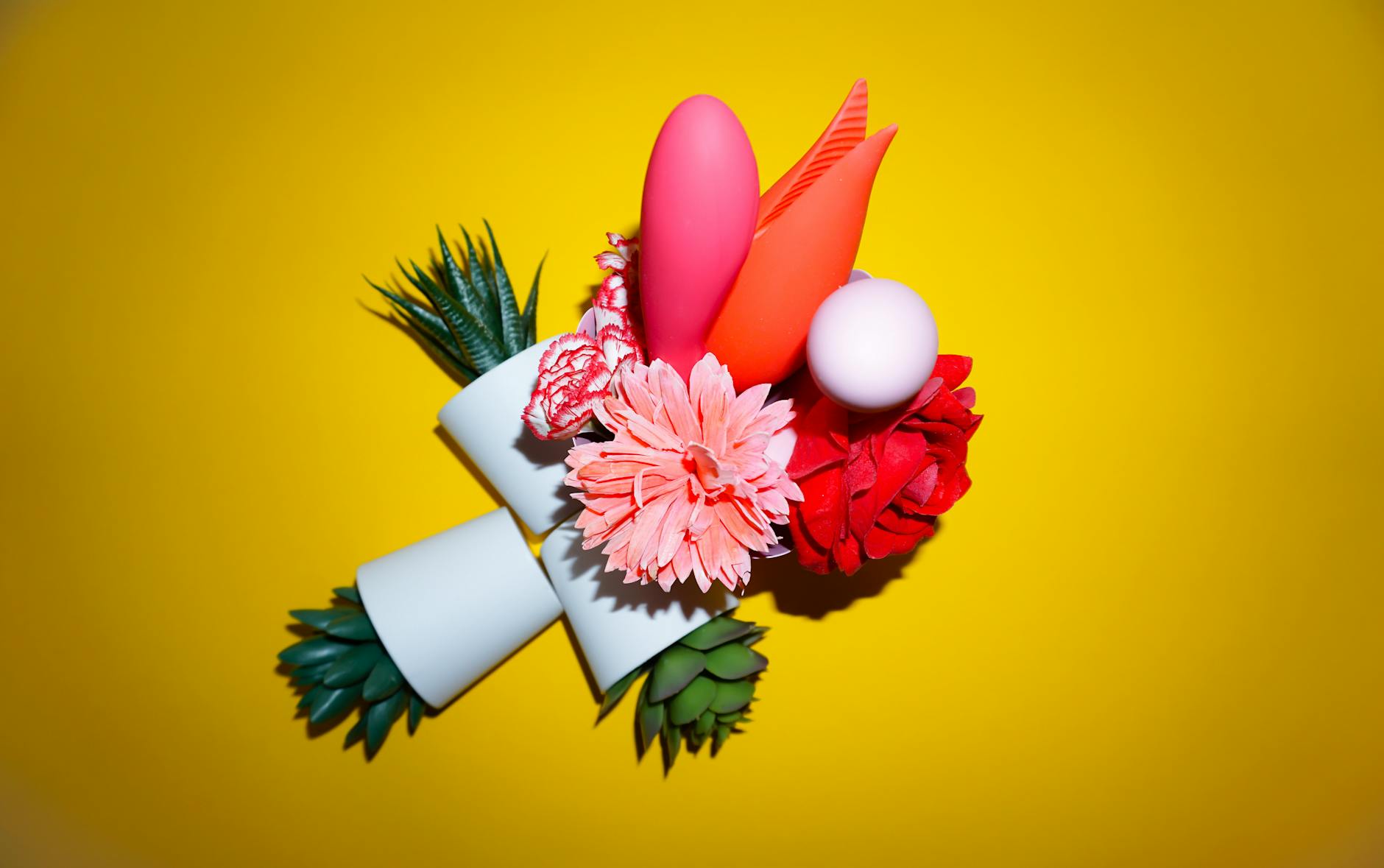
Let's talk about the elephant in the room
Most couples don't introduce a toy into their sex life because they're afraid it'll change something fundamental. And here's the thing? It will. But not the way you think.
In my 25 years working with couples, I've watched lemon vibrators move from taboo to conversation starter to absolute centerpiece of pleasure practice. The couples who integrate them early, and who adjust how they use them as their relationship evolves, report higher satisfaction and deeper sexual communication than those who avoid the subject entirely. A lemon clitoral vibrator isn't a replacement for your partner. It's a translator.
The honeymoon phase: months 0-18
You're new, you're curious, and honestly, you might be a little nervous about bringing anything up.
Here's the move: don't present it as a solution to a problem. Present it as exploration. "I've been thinking about trying something, and I'd feel more comfortable if you were there" is wildly different energy than "You're not getting me there fast enough." One opens a conversation. The other closes it.
In this phase, a lemon vibrator works best as foreplay amplifier, not as the main event. Use it while your partner's doing other things. Let them see it work on you, in real time. Most people who've never witnessed how their partner responds to the right touch with the right tool are genuinely fascinated. Fascination beats defensiveness every time.
The Lem vibrator in particular works here because it's visual, compact, and the sensation is distinct enough that you can narrate what's happening. "That feels incredible right there" while using it tells your partner something their hands or mouth alone might never teach them. You're not replacing them. You're showing them.
Key moves for early relationships
Start solo or suggest you'll use it solo, then invite them to watch. Keep it lighthearted. "Want to see something wild?" beats clinical explanation. Use lower intensity settings (patterns 1 and 2 on most lemon clitoral vibrators) so the sensation stays exploratory, not overwhelming. And absolutely discuss it after, not during. "That was fun because of X" gives your partner actual information instead of mystery.
The established phase: 2-7 years
The butterflies have settled into something real. You know each other's bodies. You're probably busier.
This is when lemon vibrators become relationship infrastructure, not novelty. The couples I work with in this phase use them for three reasons. One: efficiency. Life is full. If a lemon clitoral vibrator gets you there in 15 minutes instead of 45, that's five more minutes to actually be together afterward. Two: consistency. Without the right stimulus, some people stop orgasming regularly, and that affects everything. Desire, confidence, connection. A tool that reliably works is preventative healthcare. Three: reduced pressure on your partner.
I can't overstate this one. If your partner knows you can finish yourself with your toy, they relax. The performance pressure evaporates. And relaxed partners are better lovers.
In this phase, lemon sexual toys work best integrated into partnered sex, not as a replacement. Your partner might use it on you while you're together. You might use it while they're inside you (if that applies to your bodies). You might use it while they watch. The integration matters more than the specific setup.
One tactical note: couples who talk about intensity beforehand fare better. "Can you use the lower setting, I'm sensitive today" or "I want the higher one, I'm not feeling much" is information your partner needs. Without it, they assume they're doing something wrong. With it, you're collaborating.
Conversation starters for this phase
"I love when we do X together. Can we try adding the vibrator to that?" is specific and inviting. "What would feel good to you if I used it?" opens their input. "I've noticed I'm more into sex when I know I can finish" is honest and removes shame from the equation.
The long-haul phase: 7+ years
You've probably gone through a renovation, a job change, maybe kids. Sex has shape-shifted three times. You know each other's bodies so well that you can sometimes finish a sentence.
Here's what I see in long-term couples who've kept lemon vibrators in the mix: they use them as a reset button. Not because the original attraction is gone, but because life is taxing. Stress kills arousal. Kids interrupt. Work exhaustion is real. A tool that jumpstarts sensation reliably becomes genuinely valuable.
Many long-term couples also report that their lemon clitoral vibrator use becomes more solo-focused again in this phase, but differently than the beginning. Early on, you might use it to build curiosity. At year twelve, you might use it because you want an orgasm before bed and your partner's already asleep. Both are fine. Both are healthy.
The couples who maintain sexual satisfaction across decades don't necessarily have more sex. They have more variety in what sex looks like. A lemon sucker vibrator one week, manual play the next, partnered sex without anything the following week. That rhythm prevents both boredom and the sense that you "should" be doing things a certain way.
Real integration in long-term partnerships
Talk about what you want from sex that month, not what you did last decade. "I'm feeling tired but touch-starved, so I'd love to use the vibrator and just have you next to me" is completely different from "I want to try something new." Treating your lemon sexual toys like a menu instead of a standard practice keeps things flexible.
Many couples also find that as they age, lemon vibrators become less about novelty and more about accessibility. If hormone changes affect sensation, if medication affects arousal, if the pelvic floor needs support post-childbirth, a tool that works becomes genuinely protective of your sex life.
The communication infrastructure you actually need
Honestly, the tool isn't what matters. The conversation is.
Couples who integrate lemon adult toys successfully do three things. One: they separate the introduction from the problem. You're not bringing a vibrator because something's broken. You're bringing it because you want to explore. Two: they check in without shame. "How'd that feel?" after doesn't have to be a therapy session. It can be a casual question while you're both still close. Three: they adjust with the relationship.
What works at year two probably doesn't work identically at year twenty. Your bodies change. Hormone levels shift. Pelvic floor recovery happens. Life circumstances vary. A lemon clitoral vibrator that served you beautifully in month three might need a different role by month 36. That's not failure. That's partnership.
When things get messy
Sometimes one person's into toys and the other isn't, and that's genuinely okay. The move is to ask why. "Is it about the toy itself, or does it feel like something's missing between us?" Those are different conversations entirely.
If your partner's uncomfortable, forcing it creates resentment, not intimacy. But if they're willing to explore, starting with observation (they watch you use it, no pressure to participate) often shifts resistance into curiosity. You're not asking them to use something. You're showing them something you enjoy, which is vulnerable and often enough to open a door.
The couples who thrive sexually long-term aren't the ones who use the fanciest tools. They're the ones who talk about what they want and actually adjust when things change.
FAQ: Your real questions
How do I bring up a lemon vibrator if we've never talked about toys?
Start smaller than you think. "I've been thinking about trying something and I'd feel more comfortable if you knew about it" is honest without pressure. You're not asking permission. You're inviting transparency. If they want to participate, great. If they just want to know it exists, that's also valid.
What if my partner thinks it means I'm not satisfied?
That's almost always what the fear is, and it's worth addressing directly. "This isn't about you. It's about my body and what works for it. I also love when we're together, and I think this might help both of us feel better." Clinical, honest, not apologetic.
Does using a lemon clitoral vibrator mean we have less sex together?
Not in my experience. Couples who use lemon sexual toys report maintaining or increasing partnered sex frequency because one or both partners feel more satisfied, more connected to their own pleasure, and less pressured to perform in a specific way. Satisfaction tends to increase desire, not decrease it.
Can we use it during partnered sex safely?
Absolutely. Water-based lube (never silicone-based with silicone toys), communication about pressure and intensity, and knowing what you're comfortable with beforehand all matter. Many couples find it deepens connection because they're collaborating toward a shared goal instead of one person carrying all the work.
How often should we be using a lemon vibrator together?
There's no "should." Some couples use it weekly. Others monthly. Some use it solo occasionally and partnered rarely. What matters is that it feels integrated into your actual life, not like an obligation. If you dread using it, something's off. If you look forward to it, you've found the right rhythm.
What if my partner wants to use it on me but I prefer solo?
That's worth exploring, but not changing unless you want to. Sometimes partners want to feel involved in your pleasure, and that's valid. Sometimes you need solo time to really tune in to your own body, and that's also valid. You don't have to merge your pleasure practice into one format.
The real thing happening here
Couples who navigate pleasure tools together are also couples who navigate change together. You're learning to talk about what you want. You're learning to adjust when something stops working. You're learning that your partner's pleasure isn't your responsibility, and your pleasure isn't their failure. Those skills transfer everywhere.
A lemon clitoral vibrator is just the vehicle. The real work is the conversation. And that conversation, done well, is what keeps long-term partnerships alive.