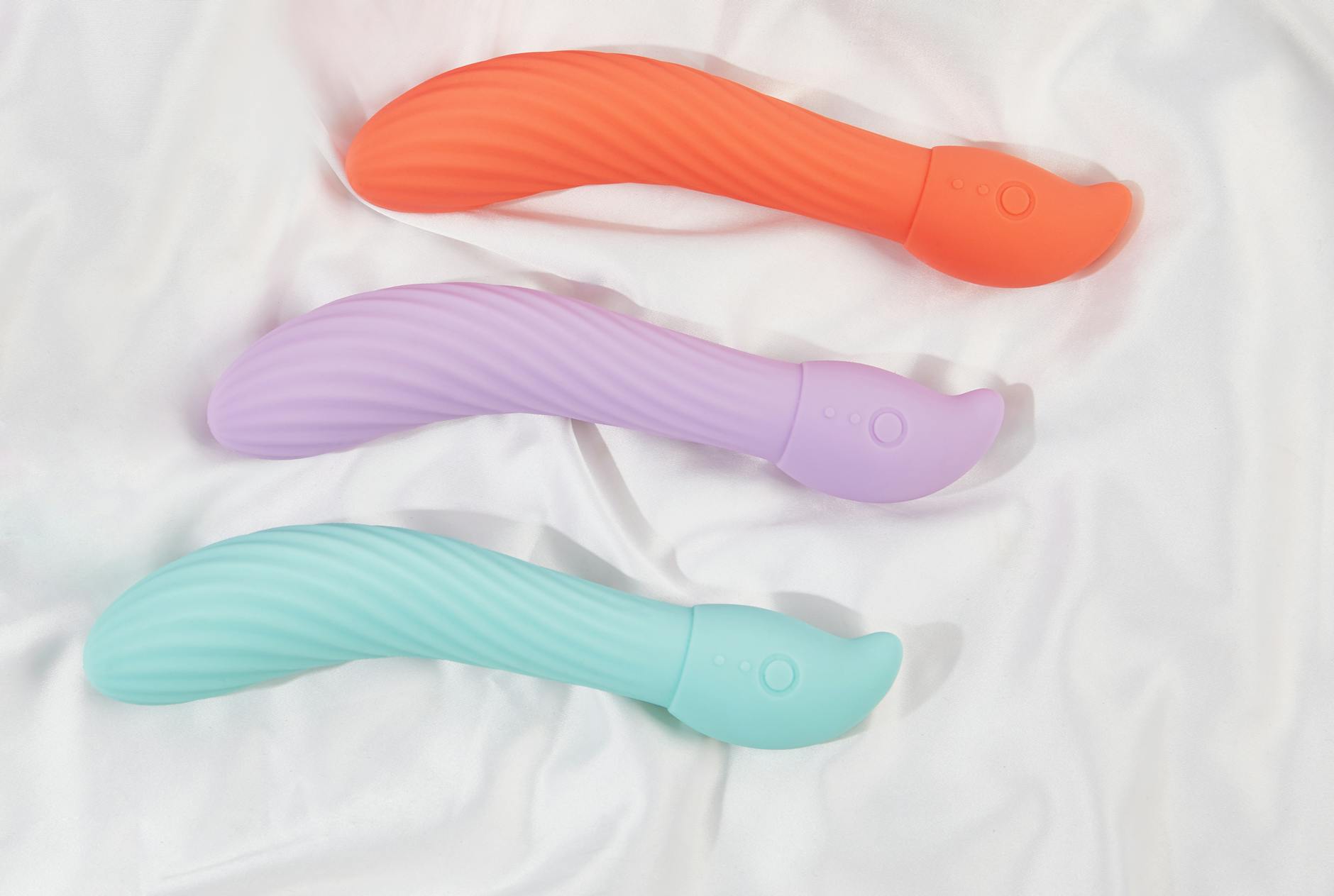
Here's what nobody tells you about anxiety and arousal
When you're anxious during sex with a partner, your nervous system is literally working against you. Your brain is running a threat-detection loop. Are they judging me? Am I taking too long? Is my body doing the right thing? That vigilance shuts down the sensory receptors that generate pleasure. You can be completely into your partner and feel absolutely nothing. It's not about desire. It's about your body being stuck in protective mode.
I see this pattern constantly in couples therapy. One person is present and wanting connection, but their nervous system won't let pleasure through. The other person feels rejected, blamed, or like something is wrong with the relationship. Both are right and both are wrong. The real problem is physiology, not the partnership.
A lemon vibrator changes this equation.
Why vibration cuts through the anxiety block
Here's the neuroscience part, stripped of jargon. Vibration is a sensory input so strong and specific that it interrupts the anxiety loop. When your clitoris gets consistent, rhythmic stimulation from a lemon clitoral vibrator, your brain has to process that signal instead of looping on threat. It's like your nervous system can't run both programs at once. The pleasure pathway wins.
This is called "sensory gating," and it's actually the same mechanism therapists use when they recommend grounding techniques during panic attacks. You're giving your nervous system a job that's louder than the anxiety.
For people with partnered sex anxiety, a lemon sucker or other clitoral vibrator serves a second function: it makes you feel in control. You're not waiting for your body to respond on someone else's timeline. You're actively generating pleasure. That shift from passive to active, from hoping to feeling to making yourself feel, is genuinely life-changing.
Starting with a lemon vibrator when anxiety is high
If you've been struggling with sensation loss or anxiety-related numbness during sex, don't jump straight into using the vibrator during partnered activity. Build the neural pathway first.
Start alone. Spend a week using your lemon sexual toy by yourself, on whatever pattern and intensity feels good. This isn't about achieving anything. It's about teaching your body that vibration plus pleasure is safe and reliable. Your nervous system needs evidence that this sensation is okay.
When you've got that baseline, introduce it during partnered foreplay, but separately at first. Your partner does their thing. You use your lemon vibrator. Neither of you is performing for the other. You're both pursuing your own pleasure in the same space. That distinction matters because it removes the audience effect, which is often the root of anxiety.
Once sensation starts returning, try using the clitoral vibrator while your partner is inside you or touching you elsewhere. The combination of their touch plus the vibrator's precision often triggers a neurological shift. Your brain gets flooded with competing sensory input, anxiety has nowhere to hide, and you actually feel something.
The timing question: when to bring it out
Most people in my practice assume they should use a clitoral vibrator only at the end, as a final push toward orgasm. That's backwards for anxious arousal. Use it at the beginning or middle of partnered sex, when anxiety is highest.
The logic is simple. Early on, you're vulnerable. You're still wondering if you're going to feel anything. You're monitoring your body instead of inhabiting it. A lemon vibrator early in the session breaks that spell. Once sensation is flowing, you might not need it for the rest of the encounter. But that initial sensory reset is what lets the rest of the experience work.
Start at a low pattern. The Lem has three patterns, and for anxiety-driven numbness, many people find pattern one to be the sweet spot. It's strong enough to interrupt the worry loop but not so intense that it adds to the overwhelm.
Your partner's role (the thing that changes everything)
I work with a lot of couples where one partner has anxiety and the other doesn't know what to do. Here's what actually helps:
Don't ask if it's working. Don't make it a referendum on your partnership. Don't take it as rejection of your touch. When your partner brings a lemon clitoral vibrator into partnered sex, treat it as a tool you're both using to access more pleasure together, not as evidence that you're not enough.
Many partners feel threatened by vibrators. That's a conversation worth having, but not during sex. Before you bring the lemon vibrator into partnered activity, talk about it separately. Tell your partner: "My anxiety makes it hard for me to feel sensation. A vibrator helps interrupt that. I want to try using one together." That framing puts it in the context of healing, not replacement.
From there, your partner can stay involved. They can hold the vibrator. They can touch you while you use it. They can watch and participate in whatever way feels natural. The vibrator isn't a substitute for them. It's a bridge that lets you access the pleasure you'd feel if your nervous system wasn't in protection mode.
The sensation-return timeline
Don't expect miraculous recovery in one session. Anxiety-related numbness didn't show up overnight, and it won't leave overnight.
Most people notice a shift within a week of regular solo use. By week two, many are feeling a significant difference during partnered activity. By week four, the nervous system has often rewired enough that sex feels genuinely good again, and many people find they need the vibrator less.
I emphasize "less," not "not at all." Some people keep using their lemon sexual toy every time because it feels better than without it. Others use it occasionally, as a reset button when anxiety spikes again. Both are fine.
When to bring in additional support
Here's the honest part: if your anxiety during sex is severe, medication or therapy can help too. A vibrator is a tool, not a treatment. If you're experiencing panic attacks, intrusive thoughts, or trauma-related responses during sex, you need a therapist who specializes in sex and trauma.
But for garden-variety performance anxiety, the anxiety that comes from feeling disconnected from your body or worrying about your partner's experience, a lemon vibrator combined with the strategies above actually rewires your nervous system. It's not a band-aid. It's genuine somatic healing.
The pleasure permission you're actually giving yourself
Here's what often happens underneath all this. People with sex anxiety don't just have nervous system dysregulation. They've internalized the idea that good sex should happen "naturally," that needing a vibrator means something is broken. That using a tool means they're not sexy or their partner isn't doing enough.
All of that is noise.
Using a lemon clitoral vibrator during partnered sex is you saying: I deserve to feel good. My body's response isn't a referendum on this relationship. I'm allowed to take an active role in my own pleasure. That permission shift is sometimes more powerful than the vibrator itself.
FAQs
Will using a clitoral vibrator during partnered sex make my partner feel inadequate?
Only if you let shame about needing it poison the conversation. If you frame it as "my nervous system gets stuck and a vibrator helps me reset," most partners understand. If you sneak it in without discussion or use it as a silent commentary on their performance, then yes, they'll probably feel bad. The tool isn't the problem. The communication is. Have the conversation before you use it. Make your partner part of the solution.
Can I use a lemon vibrator if I'm still numb even with external stimulation?
Yes, actually. For severe numbness, the strength of a good clitoral vibrator is often the only thing that breaks through. The Lem is specifically engineered to deliver consistent vibration without excessive intensity, so it's gentler than some but still strong enough to interrupt numbness. Start on the lowest setting and work up. If you're still not feeling anything after a few weeks of regular use, talk to a gynecologist about whether medications or other factors might be involved.
Is it better to use the lemon vibrator alone first, or start using it with my partner right away?
Alone first, if anxiety is your main issue. You're building evidence that your body can feel pleasure again without the added pressure of having someone watching or depending on your response. Once you've got that baseline, you can introduce it to partnered sex with way more confidence. That confidence often relaxes your partner too, which actually makes the experience better for both of you.
What if my partner wants to use the vibrator on me but that feels too vulnerable?
Start with you holding it and them touching you elsewhere. Then gradually experiment with them holding it while you guide the pressure and movement. Vulnerability builds slowly. You're retraining your nervous system to trust that pleasure is safe, and that includes trusting your partner with your pleasure. That's work, and it's worth doing at your own pace.
Can anxiety come back even after I've healed this?
Yes. Life stress, relationship changes, hormonal shifts, or new pressures can reactivate anxiety any time. When it does, your lemon sexual toy becomes a reset button again. That's not failure. That's just how nervous systems work. You're not starting from zero next time. Your body remembers that vibration plus pleasure equals safety. The recovery is usually faster the second time around.
Does this work if I have trauma around partnered sex?
Vibrators can be helpful, but trauma requires trauma-informed care. A good sex therapist or trauma therapist should be part of this work. A vibrator alone won't heal trauma. It can be one tool in a larger healing process, but don't try to use it as a substitute for actual therapy if your anxiety comes from past harm.