
Let's name the thing nobody talks about
Your libido didn't vanish. It got buried under diaper duty, sleep deprivation, and the specific exhaustion that comes from being touched by small humans all day. The desire is still there. It's just been crowded out by survival mode.
Here's the thing about postpartum and early parenting: your nervous system is in overdrive. You're responding to constant physical demands, interrupted sleep, and the weight of being the primary caregiver. Pleasure gets deprioritized because your body is too busy managing everything else. That's not a personal failure. That's physiology.
Lemon vibrators can help you bypass the noise and reconnect directly with sensation. Not because they're magic, but because they work with how your overtaxed nervous system actually functions. Let me walk you through why and how.
Why pleasure disappears after becoming a parent
Three things happen at once. First, you're touched out. Your body has spent months being someone else's primary source of comfort and physical care. The idea of more touch, even intentional pleasure-oriented touch, can feel like one more demand on an empty tank.
Second, your mental load is enormous. Even when your partner is handling bedtime, part of your brain is still managing the mental inventory. Did I pack snacks? Is that a fever? When is the next doctor appointment? That background hum of worry shuts down the kind of focused attention pleasure requires.
Third, fatigue isn't just tiredness. It's a state where your nervous system genuinely struggles to shift into the parasympathetic activation that arousal needs. You're running on cortisol and adrenaline. Your body isn't built to access pleasure from that place without help.
Why lemon vibrators work when nothing else feels right
Unlike penetrative sex or manual stimulation, lemon clitoral vibrators work with the nervous system's current state, not against it. Here's why that matters:
They require minimal mental bandwidth. No positioning to figure out, no timing to negotiate with a partner, no performance pressure. You turn it on and let it do the work. Your brain gets to stay mostly offline.
The pattern is repetitive and predictable. Anxiety loves novelty and unpredictability. A lemon vibrator's consistent, gentle suction-based stimulation actually feels soothing to an overstimulated nervous system. It's the opposite of the chaos of parenting.
They're fast. When you've got 20 minutes while the kids watch a show or after they're asleep, you need pleasure that doesn't require a long warm-up. The Lem's airwave technology gets you there efficiently without feeling rushed.
You can use them solo, which means no coordination. You don't have to explain what you need, wait for a partner to be ready, or feel guilty about taking time. That autonomy itself is pleasure-inducing when you've been making concessions all day.
The three-tier approach to reconnecting
Start here. Don't try to have a full partnered sexual experience yet. That's a longer conversation and a different readiness.
Tier 1: Solo exploration, no pressure. Set a phone timer for 10 minutes. You're not trying to orgasm. You're trying to remember what solo pleasure feels like when you're not exhausted. A lemon vibrator at pattern 1 or 2 lets you stay in control and exit whenever you need to. The goal is sensation, not outcome. Repeat this 3-4 times before moving to tier 2.
Tier 2: Pleasure with ownership. You're now deliberately creating a small ritual. Maybe it's 15 minutes on Sunday morning after your partner takes the kids to their activity. Or Wednesday night after bedtime. A clitoral vibrator like the Lem becomes the anchor for that time, the signal to your nervous system that this block is for you. No multitasking. No phone. Just you and sensation.
Tier 3: Reintroducing partnered sex without pressure. Once you've reestablished the pathways to your own pleasure, sharing that with a partner becomes less fraught. You already know what works. You're not starting from zero. Talk beforehand about what you want, use your lemon vibrator as part of partnered sex if it helps, and keep it low-pressure. No performance metrics.
The conversation with your partner
This is the hardest part, so I'll be direct. You need to tell your partner that your libido didn't die. It got submerged. And you need their help getting it back.
Specifically: you need protection of time. Not just permission to be alone, but actual structural protection. One evening a week where they're handling everything and you have the space to reconnect with your own body. That's not selfish. That's maintenance.
You also need them to understand that your capacity for sex right now might look different than it did before kids. You might need to start solo before you're ready for partnered sex. You might need to use a vibrator as part of the experience. You might need to take breaks. All of this is normal, and all of it is workable.
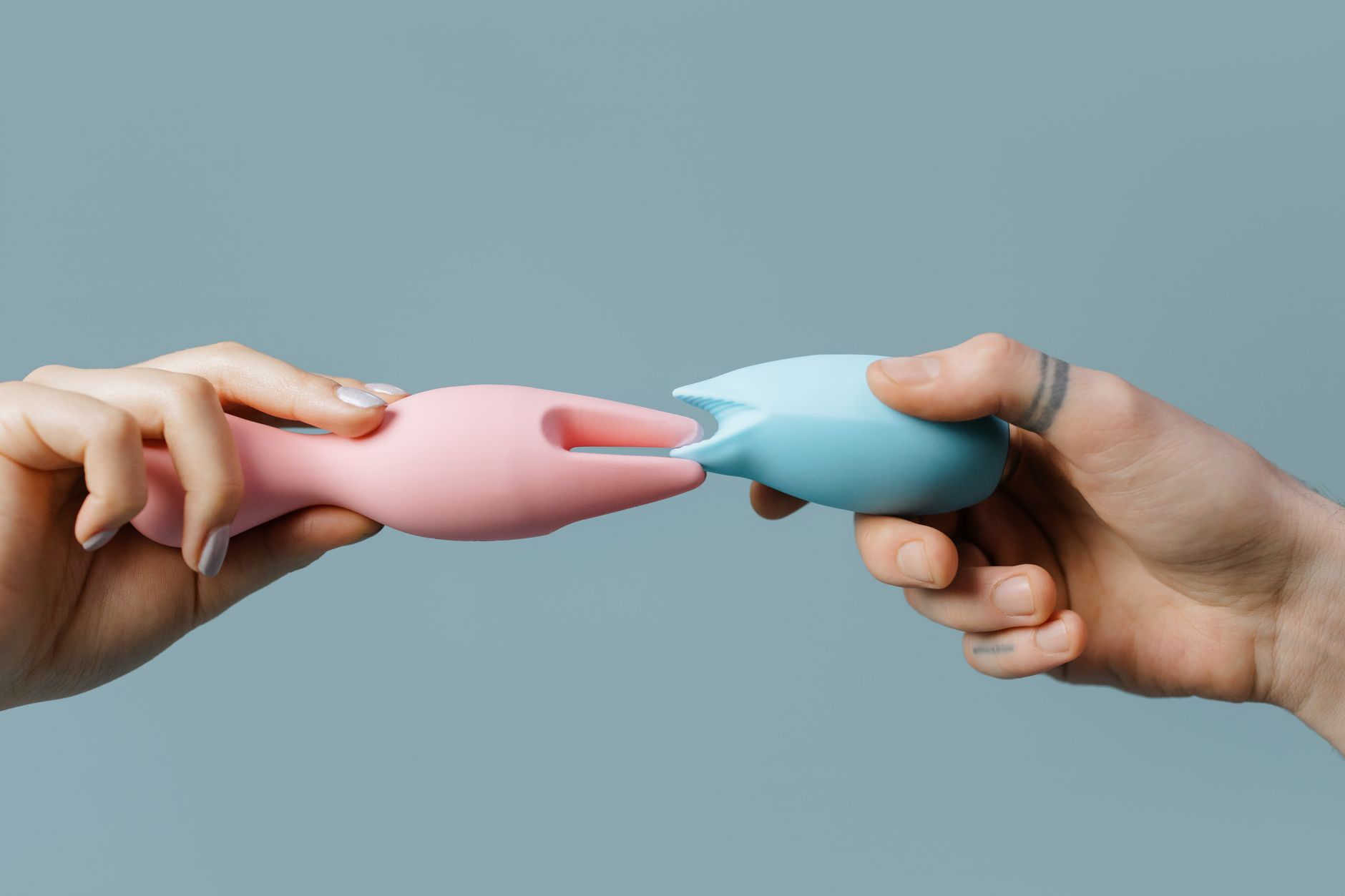
Photo by cottonbro studio on Pexels
When exhaustion is the real blocker
Sometimes low libido isn't psychological. It's physical. You're running on 5 hours of fragmented sleep and your body is in chronic underfueling. No lemon vibrator solves that.
But here's what helps: using a vibrator becomes permission to stop trying to force desire and start acknowledging reality. You don't have to want sex. You can want 10 minutes of sensation and rest. Those are different. A lemon clitoral vibrator gives you access to pleasure without the demand of participation that partnered sex requires. That's huge when you're depleted.
If the exhaustion is chronic, that's also worth naming to your partner and possibly a therapist. Some parents navigate this for years because the system never actually allows for recovery. If that's you, the vibrator isn't the fix. The fix is restructuring how childcare labor is shared. But the vibrator can help you maintain some access to pleasure while you're working on the bigger picture.
Practical setup for tired parents
Keep your lemon vibrator somewhere discreet but accessible. Not in a drawer you have to dig through. Somewhere you can grab it without decision-fatigue. A lot of people keep theirs on the nightstand in a small silk bag.
Charge it regularly so it's always ready. Nothing kills momentum like discovering it's dead.
Have lube nearby. Water-based works best with silicone. Even though lemon vibrators are designed to work with natural lubrication, you've been touched out. Adding lube means less physical friction and a gentler experience that your nervous system will appreciate.
Set that phone timer. It removes the cognitive load of tracking time and creates a clean boundary. When it goes off, you're done. No guilt.
Consider a time when one parent is definitely occupied. Post-bedtime when your partner is reading, or Saturday morning when they're at the gym. Build it into the routine like you would any other self-care.
When to bring your partner in
You don't have to. Solo reconnection is completely valid. But if you want to rebuild partnered intimacy, timing matters.
Wait until you've had at least a few solo experiences with your lemon vibrator. You need to be reconnected enough that pleasure feels possible. Then, when you're ready, introduce it into partnered sex. You might use it while they're inside you. You might use it while they watch. You might use it and they do something else. The shape doesn't matter as much as the fact that you're choosing it together.
Honestly? Many of my clients find that using a vibrator during partnered sex removes the pressure for their partner to perform a specific way. Everyone gets to relax. Everyone gets to enjoy. It changes the dynamic from transactional to collaborative.
FAQ
How long does it typically take for libido to come back after kids?
It depends on how recently you had them and whether you're still in survival mode. For some people, 3-4 months of consistent solo reconnection shifts things. For others, it takes longer. The variable isn't the vibrator. It's whether your nervous system has enough space and rest to prioritize pleasure at all. If you're still in the thick of infant care, manage expectations. But if your youngest is toddler-age and you're still struggling, that's worth investigating.
Can using a lemon vibrator make me want sex with my partner?
Not directly. But reconnecting with your own pleasure can make you more open to partnered sex because it removes the pressure. You're not trying to force desire that isn't there. You're accessing sensation deliberately. That's sometimes the gateway to wanting more.
My partner feels hurt that I need a vibrator to want sex after kids. What do I say?
That's a conversation worth having with both of you, ideally with a therapist. But the short version: your libido didn't tank because your partner isn't attractive. It tanked because your nervous system is overwhelmed. A vibrator is a tool, not a referendum on the relationship. Lots of couples use them, and plenty use them more after parenthood than before.
Is it okay to use a lemon vibrator while my partner's asleep?
Completely. You don't need permission or a specific context. Solo pleasure is straightforward. Use your lemon clitoral vibrator whenever you have 10 minutes and feel like reconnecting with yourself. That's self-care, not something that requires negotiation.
What if I feel guilty taking time for myself?
That guilt is real and it's also a symptom of a bigger imbalance. You're not selfish for wanting 10 minutes of pleasure. You're not neglecting anyone by stepping away to reconnect with your body. If that guilt persists, it might be worth unpacking with a therapist, because it usually points to beliefs about mothers and pleasure that are worth examining.
Can a lemon vibrator help if I'm breastfeeding?
Absolutely. Breastfeeding can actually suppress some sexual response, so reconnecting with sensation through solo vibrator use is particularly helpful during that period. Many nursing parents feel touched out specifically because of the physical demands of feeding. Taking back pleasure that's just for you helps restore your sense of bodily autonomy.
The real reconnection
Libido doesn't come back because you find the right tool. It comes back because you create the conditions for it. A lemon vibrator removes some of the friction that prevents you from accessing pleasure when you're exhausted and touched out. But the real work is the time you protect, the conversation you have with your partner, and the permission you give yourself to want something just for you.
Your desire didn't disappear after having kids. It just needed the right conditions to resurface. Start solo. Use a tool designed to work with your nervous system. Build a small ritual. And when you're ready, bring your partner in.
The pleasure you had before kids? You can build a different version now. It might look nothing like it used to, and that's not a loss. That's evolution.
If you want to talk through what reconnection might look like for your specific situation, reach out. I'm here to help you navigate the complexity.