When stress steals your sex drive
Let's be real. When your job is imploding, your family needs something from you every five seconds, or you're processing grief, your clitoris does not leap to the front of the priority list. It gets buried. Desire doesn't just quiet down. It vanishes.
This isn't laziness or lost attraction or a dead relationship. This is your nervous system in overdrive, dumping cortisol into your bloodstream and telling your body that reproduction is the last thing you need right now. Your libido crash is a rational response to an irrational amount of stress. Which is also why you can rebuild it.
The physiology of stress and desire
Here's what happens. Chronic stress elevates cortisol, which suppresses dopamine and testosterone. Your prefrontal cortex (the part that decides "I want pleasure") gets quieter while your amygdala (the alarm bell) gets louder. You're living in survival mode. Pleasure doesn't fit.
The neural pathways for arousal are still there. Your clitoris hasn't forgotten how to respond. Your body just needs permission to shift gears from "threat" to "pleasure." That's where a lemon vibrator comes in, not as a fix, but as a reset button.
Starting small when desire feels foreign
Don't expect your libido to roar back. Expect it to whisper.
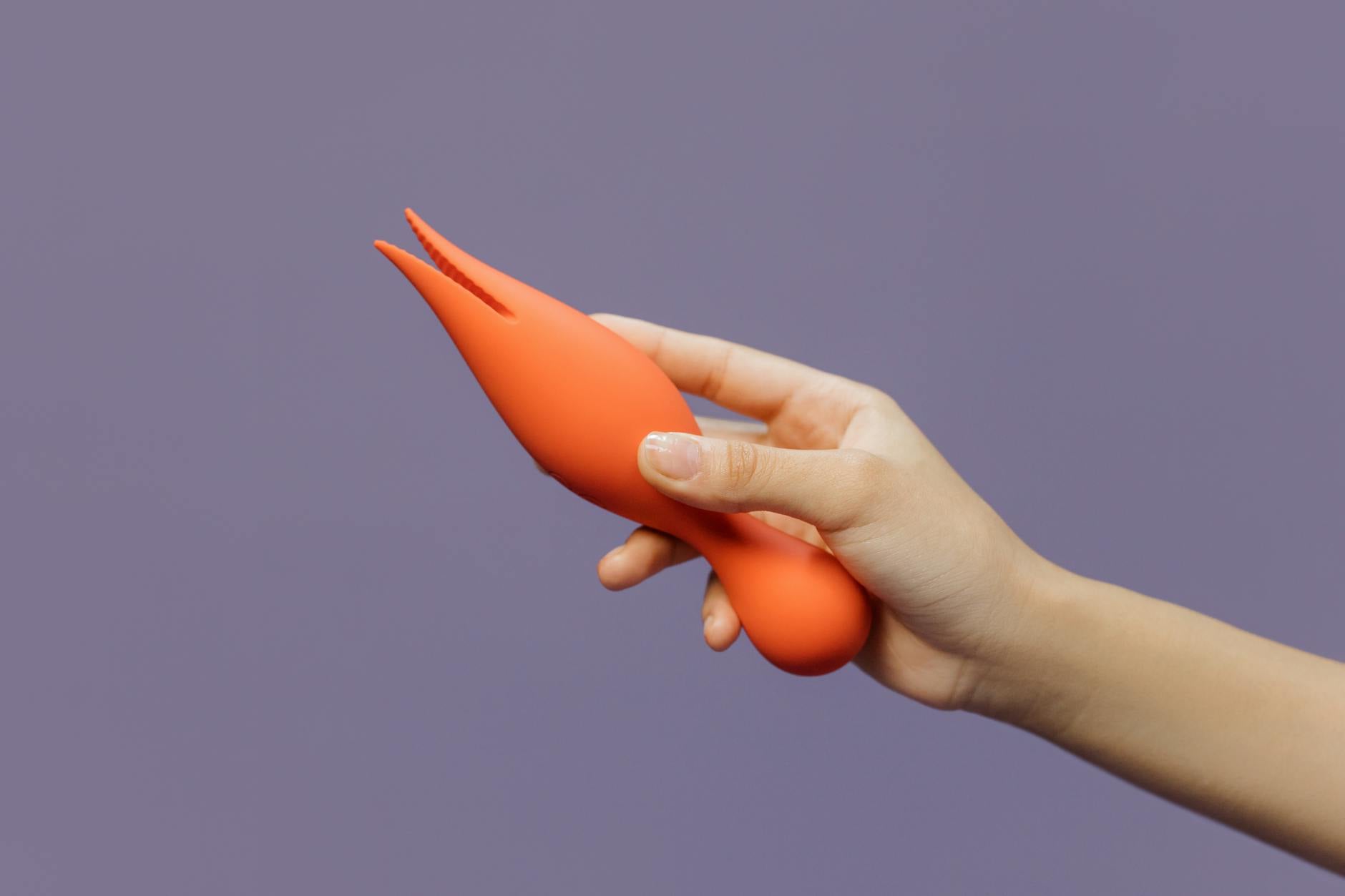
Set aside twenty minutes. Not because you have to orgasm, but because your nervous system needs to remember what non-threat stimulation feels like. Start clothed. Hold your lemon vibrator. Feel the weight of it. Run your thumb over the silicone. This sounds babyish, but it's not. You're training your body that this object is safe, familiar, yours.
Then turn it on at the lowest setting. Not against your body yet. Just listen to the hum. Let your parasympathetic nervous system register: this is not a threat. This is intentional. This is yours.
How stress changes what touch feels good
When you're stressed, your pelvic floor tightens. Your skin becomes more sensitive, sometimes painfully so. What normally feels good can feel overwhelming. That's why starting with the lowest pattern on your lemon vibrator matters. Your body will guide you up.
Most people use their lem vibrator at patterns 4 or 5. When you're rebuilding after stress, start at 1 or 2. You might stay there for three sessions. You might stay there for three weeks. There is no timeline.
One shift that helps: focus on the sensation, not the goal. Not "I need to come" but "what does this actually feel like?" Stress makes us goal-oriented. Pleasure is the opposite of productive. Notice the texture of the sensation. Notice where your attention goes. Notice if your jaw is clenched (it probably is) and let it relax.
Moving from solo practice to partnered intimacy
If you have a partner, this is worth discussing separately from "let's have sex again." Those are two different requests.
Maybe you want to use your lemon vibrator alone first, without the pressure of shared experience. That's valid. Maybe you want your partner present but not touching. Also valid. Maybe you want them to watch. Or maybe you want the lemon clitoral vibrator in your solo ritual for three months before you bring it into the bedroom with them.
The worst thing you can do is rush back into partnered sex because you feel guilty. Stress-driven libido crashes often come packaged with guilt. Don't borrow tomorrow's obligation for today. If your partner loves you, they can wait for you to rebuild this.
The role of ritual and permission
Here's something most people don't talk about: stress kills pleasure partly because you don't have permission to take it. Your brain is saying "you don't have time for this." So you have to consciously give yourself permission, out loud.
Say it: "This twenty minutes are mine. I'm not solving a problem. I'm not being productive. I'm remembering what feels good." You can set a timer so your anxiety doesn't hijack your nervous system wondering if you should be doing something else.
Light a candle if that helps. Close a door. Put your phone in another room. These aren't luxuries. They're signal to your stressed-out brain that you're creating safety.
When a lemon sucker is exactly what you need
The design of a lemon vibrator or lem vibrator matters here. Suction-based stimulation doesn't require the mental bandwidth that thrusting or manual touch does. You position it. It does the work. Your brain can relax into sensation without managing technique or reciprocation.
For people rebuilding after stress, that absence of "I have to do something" is crucial. A lemon sexual toy that works via suction takes the performance out of pleasure. You're not performing for your body. Your body is just receiving.
The slow return to desire
Don't expect fireworks. Expect embers. You'll have a session where your lemon vibrator feels nice and you feel nothing. That's okay. Then you'll have a session where something shifts. You'll feel a flutter. Then nothing again. This is normal.
Desire doesn't rebuild in a line. It comes back in fits. One week you feel a twinge. The next week nothing. Then suddenly you think about pleasure on a Tuesday morning. These are the sparks. Keep going.
Knowing when to talk to someone
If your stress is clinical (major depression, anxiety disorder), a lemon vibrator helps but it's not treatment. A therapist is. Same if the stress is relational. If your partner is the source of the stress, you're not going to rebuild desire just by adding vibration to the picture.
If after eight to twelve weeks of solo practice with your lemon clitoral vibrator nothing shifts, talk to your GP. Sometimes libido crashes that stick around signal deeper stuff: thyroid issues, hormonal imbalance, or depression that needs actual intervention.
What you're actually rebuilding
This isn't about forcing your libido to return. It's about reminding your nervous system that pleasure is still available to you. That your body is still yours. That even when everything else is chaos, this small ritual is something you control.
Your lemon adult toys aren't magic. They're permission objects. They say: I deserve to feel good. My pleasure matters. My stress is real, and so is my right to reclaim this part of myself.
That's the whole point. Start small. Use your lem vibrator at low intensity. Notice what you feel. Give yourself time. Your libido will return when your nervous system feels safe enough to let it.
FAQ: Rebuilding pleasure after stress
How long does it take for my libido to come back after stress?
There's no fixed timeline. Some people feel a shift in three to four weeks. Others need two to three months. Libido isn't a switch. It's a dimmer. If your stress is ongoing, your desire will stay quiet. If you're actively managing the stress and creating space for pleasure, you'll see movement within four to eight weeks.
Can I use my lemon vibrator every day when I'm rebuilding?
Yes, but not the way you might think. You don't need to pursue orgasm daily. Daily awareness helps more. One day you use it for five minutes and notice sensation. Another day you use it for twenty minutes and feel nothing. The consistency trains your nervous system that pleasure is a regular part of your life, not something that only happens when you're performing.
What if my partner doesn't understand why I need solo time with my lemon clitoral vibrator?
Have the conversation separately from sex. Say: "My stress has tanked my desire. I need to rebuild it alone first. This isn't about you. It's about me remembering what feels good." If your partner can't hold space for that, that's information. A partner who respects your pleasure will wait for you. Bring your partner in when you feel ready, not when you think you should.
Does using a lemon sucker when I'm stressed actually help, or am I just distracting myself?
It's both. You're training your nervous system to identify pleasure as safe while also creating a small interval where stress isn't the loudest voice. That's not distraction. That's resilience. Your body needs to remember it can feel good, even briefly, even while life is hard.
Should I tell my therapist I'm using a lemon vibrator to rebuild my libido?
If you're already in therapy, yes. If your therapist is competent, they'll validate it. Rebuilding pleasure after stress is part of trauma and stress recovery. A good therapist knows this. If your therapist gets weird about it, find a new one.
What if I use my lemon vibrator and feel nothing at all?
That's not failure. That's data. Your nervous system is still in threat mode. Keep showing up. One session of nothing doesn't mean the next will be. Sometimes the first shift isn't pleasure. It's curiosity. You notice something. That's enough to build on. If nothing shifts after eight weeks, check in with your doctor or a therapist. Anhedonia (inability to feel pleasure) can signal depression that needs treatment.
You're not broken, just paused
Stress doesn't destroy your capacity for pleasure. It just puts it in storage. Your lemon sexual toys are one tool for retrieving it. The other tools are time, permission, and patience with yourself. Start with ten minutes. Notice what happens. Then try again. Your desire will return when you stop demanding it and start inviting it back.
If you're struggling with how stress affects your whole relationship, not just sex, understanding how to rebuild intimacy when life feels disconnected can help. And if you're wondering whether your stress is affecting your partner too, exploring how different refractory periods show up in stressed relationships might be useful.