Let's start with what's actually happening
You need more time to get turned on than you used to. Or more time than your partner does. Or more time than you think you're "supposed" to take. And somewhere in that gap between what you feel and what you think you should feel, you've decided something is wrong.
It isn't. Slow arousal is not a malfunction. It's a rhythm.
Why arousal slows down (and it's not always hormones)
There are real, measurable reasons your body might be taking longer to warm up. Some are physical. Some are psychological. Most are both.
Stress tanks arousal fast. When your nervous system is running on cortisol, your brain literally deprioritizes sexual response. That's not laziness. That's biology protecting you from perceived threat. Busy schedules, financial worry, family pressure, work deadlines. Even ambient stress that's not directly about sex will slow your arousal response down significantly.
Age changes the timing too, though not always in the direction people assume. Yes, hormonal shifts (perimenopause, menopause, testosterone changes) can slow arousal. But so can medication, blood pressure issues, thyroid dysfunction, and sleep deprivation. And sometimes arousal just gets slower naturally over time without any medical cause at all. That's normal aging, not dysfunction.
Distraction is another sneaky culprit. If you're mentally running through your to-do list, worried about how you look, or performing arousal instead of actually feeling it, your body won't respond as quickly. The mind has to be somewhat present for the nervous system to shift into parasympathetic (rest and digest, aka the arousal) mode.
The lemon vibrator advantage when warm-up time matters
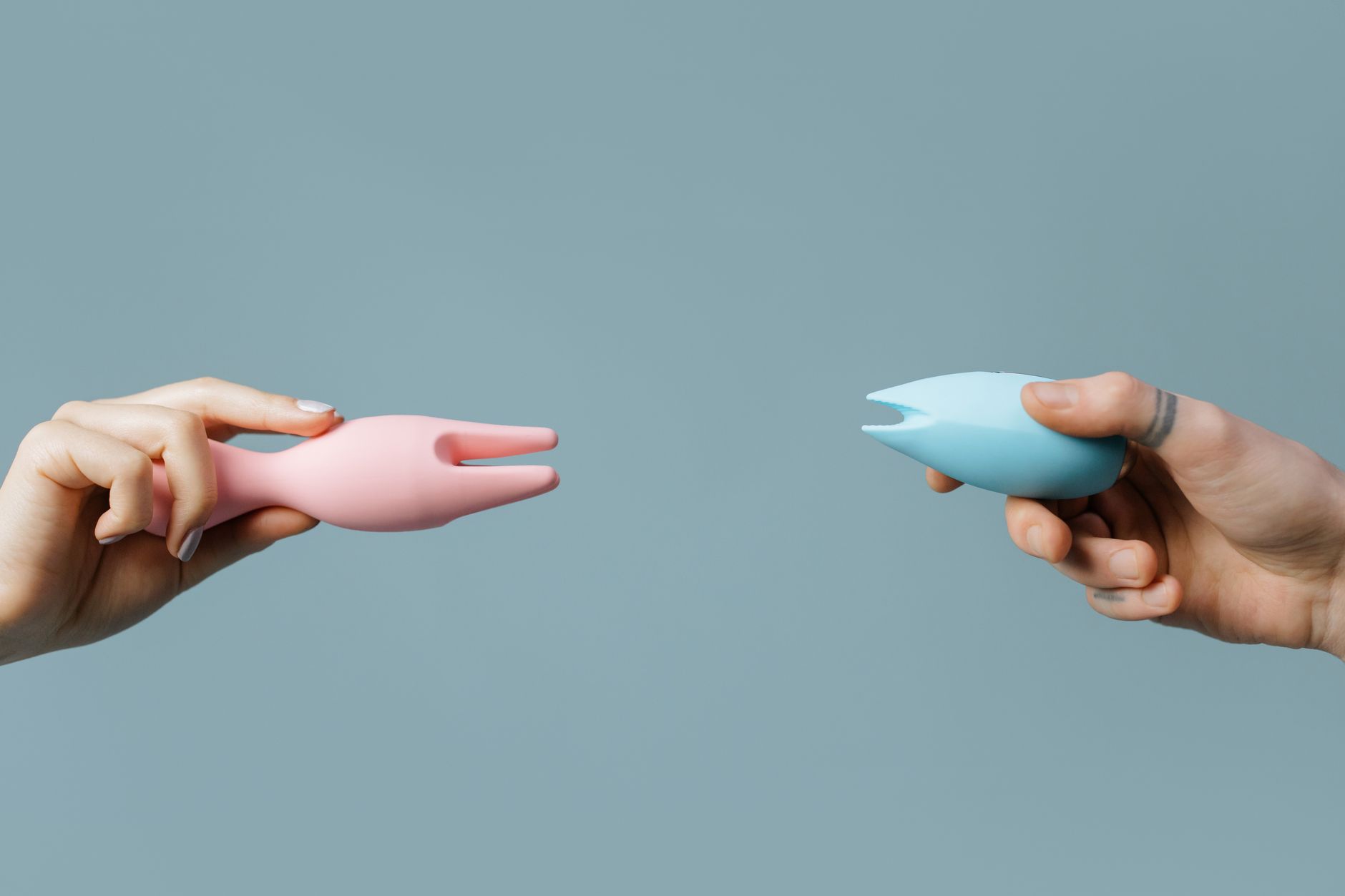
This is where air-suction devices like the Lemon clitoral vibrator shine. They're not traditional vibrators. They don't require rapid-fire sensation or constant intensity to work.
The suction mechanism stimulates the clitoris through gentle, rhythmic pressure rather than direct friction. This means you can start at a much lower intensity level and still feel a clear, pleasant sensation. Pattern 1 on a lemon vibrator doesn't feel frustratingly weak. It feels like a real, distinct sensation from the start, which is crucial when you need to ease into arousal rather than jump into it.
This matters because one of the biggest obstacles to pleasure when arousal is slow is frustration. If you turn something on and feel almost nothing, your brain tenses up. Your nervous system registers "this isn't working" and pulls further away from the parasympathetic state you need. A lemon vibrator with its graduated intensity levels lets you start where you actually are, not where you think you should be.
Setting up your environment for slower arousal
Before you even pick up the vibrator, your surroundings matter. A lot.
Remove time pressure. This is non-negotiable. If you're expecting arousal to happen in 5 minutes because that's all you have before your partner gets home or before you need to move on, your nervous system knows. It tenses. Instead, block out actual time. Tell yourself you have 30 minutes. Tell your partner. Remove the clock.
Kill digital noise. Phone in another room, not just silent. Notifications create micro-stress responses, even when you don't consciously notice them. Your nervous system does.
Create a temperature you actually enjoy. You can't relax if you're cold or overheating. Blankets, layers, whatever puts your body in the comfort zone. Being warm signals safety to your nervous system.
Lighting matters too. Soft, warm light (or darkness, or whatever makes you feel safe) is better than bright overhead bulbs. The goal is to feel like you're in a private, protected space, even if you're alone in your bedroom.
The warm-up protocol with a lemon vibrator
Start without the device. Touch yourself. This isn't about orgasm or even strong arousal. It's about tuning in. Light touch on your thighs, your breasts, your stomach. This activates sensory pathways and tells your nervous system that pleasure time has started. Spend 5 to 10 minutes here, minimum. This is not wasted time. This is you getting there.
When you move to the lemon vibrator, start on pattern 1 or 2 at low intensity. You're not trying to climax yet. You're gathering sensation. Explore how different areas feel. The tip of the clitoris, the sides, the hood. Some people find the surrounding tissue more sensitive when arousal is slower. Experiment.
Breathe consciously. Holding your breath tenses your pelvic floor and your nervous system simultaneously. Slow, deep breathing keeps you parasympathetic. In through your nose for four counts, out through your mouth for four counts. It sounds simple. It works.
Let your mind wander. Some people think they need to focus intently during sex or solo play. The opposite is often true, especially when arousal is slower. Let yourself daydream, fantasize, or think about absolutely nothing. Your job is not to maintain intensity. It's to stay relaxed.
Take breaks. If intensity peaks and then drops, that's fine. Switch to a lower pattern, take your hand away, touch yourself differently, or do something completely non-sexual for 30 seconds. This isn't a failure. This is exactly how slower arousal sometimes works. It builds, releases, builds again. Honor that rhythm instead of fighting it.
The partner conversation (if that applies to you)
If you share a bed with someone, they need to understand this is happening and why it matters. This is not about them. It's not about attraction or desire for them specifically. It's about your body's actual arousal timeline.
The conversation is simple. "My arousal takes longer now. That's my nervous system, not my feelings for you. Here's what helps." Repeat that the goal is not to speed things up. The goal is for both of you to stop fighting against the actual timeline and instead work within it.
If they're involved in your pleasure, they can help by keeping the environment low-pressure, by being patient, by not watching you expectantly waiting for results. Their relaxation matters too. If they're tense, you'll pick up on it.
If they push back, or if they make your slower arousal about their adequacy or your desire for them, that's a different conversation, and it might be worth having with a therapist.
When to check in with a professional
Slow arousal becomes a concern if it's new and sudden, if it's causing you genuine distress, or if it's paired with other symptoms like pain, numbness, or complete loss of desire across all contexts.
See a doctor if arousal slowdown appeared right after starting a new medication, or if you suspect hormonal changes. A good GP can rule out thyroid issues, vitamin deficiencies, or other medical causes in about an hour.
See a therapist if stress is the culprit. A few sessions with someone trained in sex therapy or somatic therapy can help you understand what's happening and build actual strategies instead of just white-knuckling through it.
See a relationship counselor if the timing mismatch between you and your partner is creating tension or resentment. That's fixable, but it needs a skilled neutral party sometimes.
The long view
Your arousal timeline is not a problem to solve. It's a variable to understand and work with. A lemon vibrator is a useful tool partly because it's effective, and partly because it forces you to slow down, to pay attention to subtle sensation, to stop chasing intensity and instead build it gradually.
That's not a compromise. That's often more pleasurable in the end.
People also ask
Is it normal for arousal to take 20 to 30 minutes?
Completely normal. Arousal timelines vary wildly between people and also within the same person depending on stress, hormones, time of day, and context. Research suggests that people with vulvas on average take longer to reach peak arousal than people with penises, but individual variation is enormous. If 20 to 30 minutes is what your body needs, that's your normal.
Can a lemon vibrator help if I'm not getting aroused at all?
A lemon vibrator can help restart sensation if arousal is slow or muted. It won't fix it if the cause is depression, severe trauma, or a relationship issue that needs addressing. But if you're generally okay but just slow to warm up, yes. A clitoral vibrator designed for gradual build like the Lemon can feel more approachable than traditional vibrators because you're not fighting against intensity from the start.
How long should I spend warming up before using a vibrator?
At least 5 to 10 minutes of non-vibrator touch. That means hands, partner hands, or no tools at all. Just sensation and breath. This activates your arousal system and primes your nervous system. After that, add the lemon vibrator and spend another 10 to 20 minutes building. This isn't wasted time. This is your actual arousal happening.
Does slow arousal mean low desire?
No. Desire (wanting sex) and arousal (the physical response) are separate systems. You can have high desire with slow arousal, or low desire with fast arousal. The speed at which your body responds has almost nothing to do with how much you want pleasure. It's about nervous system responsiveness, not motivation.
Should I use lube with a lemon vibrator if arousal is slow?
Maybe. Slow arousal sometimes pairs with reduced lubrication, especially if stress or hormones are the cause. A little water-based lube makes the suction sensation feel smoother and more comfortable. It's not necessary, but it often helps. Use sparingly since the Lemon works best when there's good contact between the device and your skin.
What if my partner thinks slow arousal means I'm not attracted to them?
Tell them directly that arousal speed and desire are different. Give them the science. Offer to show them what you feel, what you need, and invite them into that timeline instead of asking them to watch from the sidelines. If they can't separate their ego from your nervous system, that's their work to do, possibly with a therapist. Your body's pace is not a referendum on your feelings.
Sources
- Masters, W. H., & Johnson, V. E. (1966). Human Sexual Response. Little, Brown.
- Basson, R. (2000). The female sexual response. Journal of Clinical Psychiatry, 61(Suppl 5), 16-22.
- Brotto, L. A., & Yule, M. A. (2011). Asexuality. Sexual and Relationship Therapy, 26(4), 365-377.
- Meston, C. M., & Frohlich, P. F. (2000). The neurobiology of sexual function. Archives of General Psychiatry, 57(11), 1012-1030.