
The strange silence after a long relationship
When a long-term relationship ends, your body becomes unfamiliar to you in a specific way. For years, pleasure has been partnered. It's been contextual. Someone else's rhythm, someone else's timeline, someone else's presence. Then suddenly, it's just you. And that can feel awkward in ways you weren't prepared for.
Many people I work with describe this as a kind of sensory vertigo. Your body expects another person. Your arousal pattern expects interaction. Even your orgasms have a partner-shaped imprint on them. Solo pleasure doesn't feel like "less"—it feels like a different language you used to speak but forgot how.
Why lemon vibrators change the equation
Here's the thing about lemon clitoral vibrators that makes them particularly useful during this transition: they're not trying to replicate partnered sex. Air-suction technology works on a completely different principle than friction or thrusting. This actually works in your favor when you're relearning your own body.
When you're used to partnered pleasure, the temptation is to rush. You unconsciously mirror the rhythm and pacing you're used to. A lemon vibrator forces you to slow down because suction stimulation requires a different kind of attention. You can't zone out. The sensation is too specific. That specificity becomes a form of mindfulness, almost by accident.
It's also gentler on tissue that's been stimulated one way for a long time. Your clitoris has muscle memory. A lem vibrator's suction approach wakes up different nerve pathways than friction-based toys. For someone reconnecting with solo sensation after years of partnership, that novelty is actually therapeutic.
The mental adjustment matters as much as the physical
Rediscovering pleasure after a breakup isn't just about technique. There's a psychological reset that needs to happen first. You might feel guilty. You might feel disloyal. You might feel embarrassed even though you're alone. These feelings are normal. They're also worth acknowledging before you even pick up a toy.
I usually suggest starting with this question: What would feel good for you without considering anyone else's reaction or timeline? Not what's "sexy." Not what you think you "should" want. What actually feels good to you, right now, in your singular body.
Once you've sat with that, a lemon vibrator becomes less about "making it work" and more about exploration. You're not trying to reach a specific outcome. You're remembering.
How to actually start
If you're new to lemon vibrators or haven't used toys since your relationship ended, start at pattern one or two. Not because you're delicate, but because lower intensity lets you feel the sensation clearly. You're gathering information about what your body responds to now, not trying to hit a finish line.
Use plenty of water-based lubricant. This isn't about needing extra moisture necessarily. It's about reducing friction and letting the suction work the way it's designed to. Lube also creates a small permission slip mentally—it says "I'm taking time for this, I'm making space for sensation."
Start with shorter sessions. Fifteen to twenty minutes. Your body is readjusting to solo arousal, which can take longer to build than partnered sex. That's not a flaw. That's you learning your own rhythm without someone else's presence in the room.
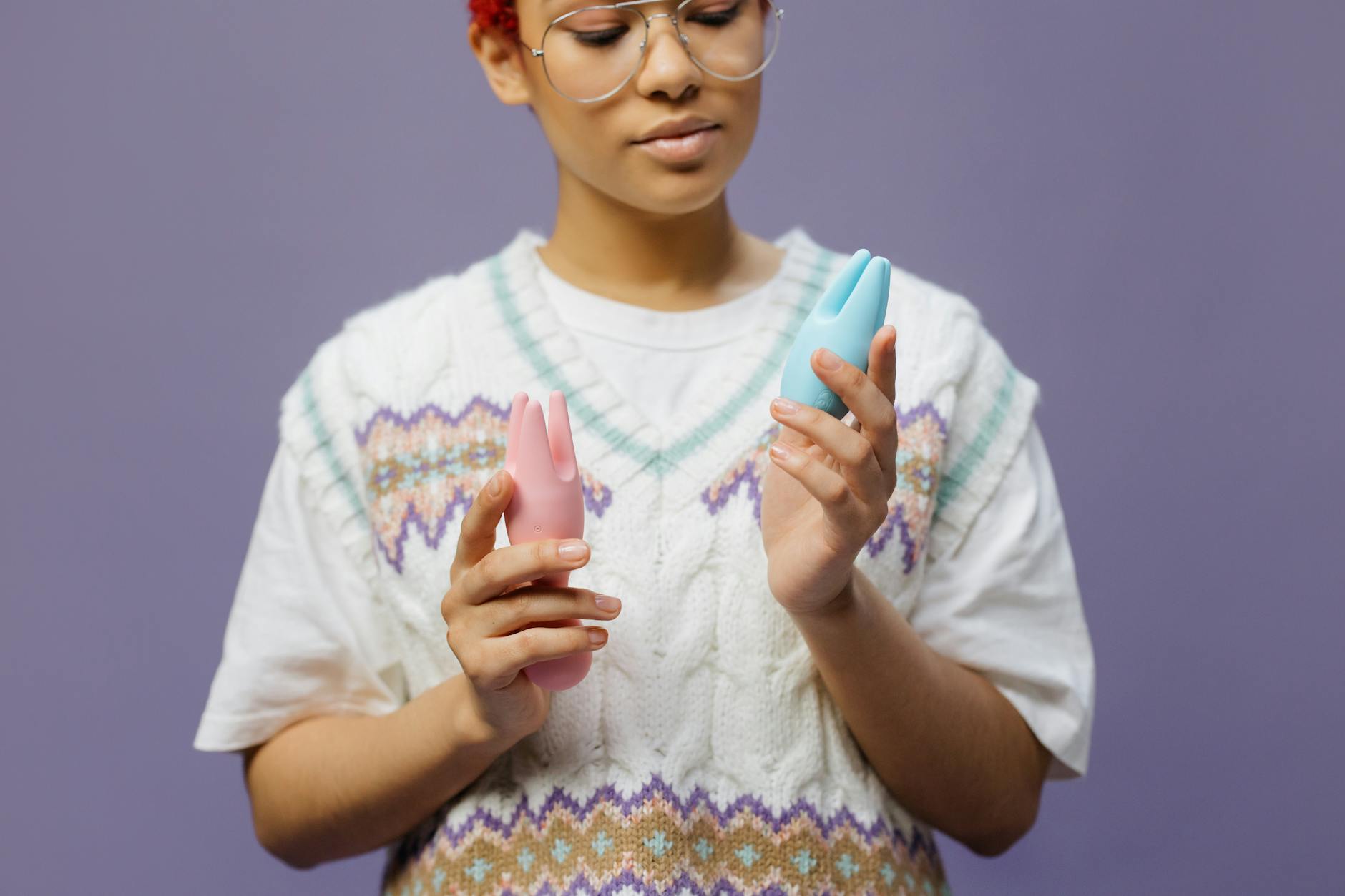
Photo by cottonbro studio on Pexels
Rewriting your arousal script
After years with a partner, your arousal probably has a familiar arc. Maybe it starts with anticipation, moves into physical contact, follows a predictable path. When you're alone with a lemon clitoral vibrator, you get to rewrite that. And that rewrite is actually one of the gifts hidden inside a painful transition.
You might discover that you actually prefer longer warm-up times than your ex did. You might find that you like different intensities at different times. You might notice that your orgasms feel different when they're entirely on your timeline. None of this is wrong. It's just yours.
For some people, this exploration phase lasts a few weeks. For others, it's months. There's no schedule. The point isn't to "get back out there" or "move on." The point is to remember that your pleasure doesn't require another person to be real.
When sensation feels numb or flat
This is incredibly common after a breakup. Emotional numbing often translates to physical sensation feeling muted. You might try a lemon vibrator and find that you feel almost nothing. This doesn't mean you're broken. It means your nervous system is protecting you.
If this happens, don't push. Instead, try using the vibrator without any expectation of arousal or orgasm. Treat it as a body-reconnection tool. Turn on the lowest setting and move slowly over the area, noticing what you can feel. This is less about pleasure and more about reactivation. Your sensitivity will return.
You can also explore how medication or stress affects sensation if numbness persists beyond a few weeks. Emotional trauma and physical numbness can be linked, and sometimes talking to someone helps more than any toy can.
The partner question
Maybe you're not actually solo. Maybe you've started seeing someone new, but you want to maintain the rediscovery process for yourself. That's valid. A lemon vibrator can absolutely be part of your solo ritual while you're also building something with someone new.
If you do eventually want to introduce a lemon vibrator into partnered pleasure, that's a separate conversation and timeline. Right now, this is about you remembering what your body can do without an audience. That foundation matters more than you might think.
For insight into how to navigate toys and a new partner, here's a deeper conversation about confidence and communication.
The gift buried in the transition
Breakups are brutal. The rediscovery of solo pleasure isn't going to make the breakup feel better. But it does something quietly important: it proves to your body that pleasure doesn't require a specific person. Your capacity for sensation, arousal, and orgasm belongs to you.
A lot of people spend their entire lives assuming their pleasure depends on another person's presence or approval. Rediscovering it alone, especially with something as responsive as a lemon clitoral vibrator, changes that. It becomes easier to know what you want without numbness clouding the signal.
That knowledge—that your pleasure is yours—will serve you whether you're single forever or partnered again. It's a kind of resilience that doesn't get talked about enough.
FAQ
How long after a breakup should I wait before using a vibrator?
There's no magic number. If you're grieving and numb, waiting might make sense. If you're ready to reconnect with your body as an act of self-care, sooner is fine. The timing is yours. A lemon vibrator isn't about "moving on" from a partner—it's about coming home to yourself.
Will using a vibrator make it harder to be intimate with a new partner?
No. Solo pleasure and partnered pleasure use different parts of your nervous system. Knowing what sensation you like actually makes partnered sex more satisfying, not less. You're more confident in what you want.
What if I feel guilty using a vibrator after a long relationship?
Guilt is a grief response. You spent years thinking of pleasure as a shared experience, and now you're reframing it as personal. That shift can trigger guilt even though you've done nothing wrong. If the guilt is strong, talking to a therapist can help you untangle whether it's mourning the relationship or internalized shame about solo pleasure. Usually it's both, and that's okay.
Should I use the same vibrator intensity my ex preferred?
No. Use what feels good to you right now. Your body might have changed. Your preferences definitely have, even if you don't realize it yet. The fact that your ex liked a certain intensity is irrelevant. Start low and adjust up.
Is it weird to use a lemon vibrator when I still have feelings for my ex?
Not at all. Pleasure and grief exist in the same body. You can miss someone and also reclaim your own sensation. These aren't opposing forces.
How do I know if I'm using the vibrator too much?
If you're avoiding other parts of healing or connection, that might be a sign to check in with yourself. If you're simply enjoying solo pleasure regularly as part of self-care, that's healthy. The key is intention, not frequency.
Your body remembers
Rediscovering pleasure after a long partnership isn't about novelty or performance. It's about returning to a place of agency. Your body knows how to feel good. It's just been a while since you asked it what it wants. A lemon vibrator is a conversation starter with yourself. Listen to what your body tells you. That signal matters. It always did.
If you want to talk through what pleasure might look like for you right now, reach out. There's no shame in asking for guidance through this transition.