
The mismatch is real, and it's not your fault
Let's be real. Desire mismatch is one of the most common relationship complaints I hear, and almost nobody talks about it honestly until it's already poisoned the bedroom. One partner lies there calculating whether to initiate, knowing the answer will probably be no. The other feels guilty for not wanting sex as often, which makes them want it even less. Neither of you is broken. You just have different baseline needs.
A lemon vibrator doesn't fix the emotional conversation you need to have. But it does solve the immediate friction. It lets the higher-desire partner get off without waiting for their partner to be in the mood. More importantly, it removes the pressure that kills desire in the lower-libido person.
Here's what I've seen work in my practice over and over again.
Why desire mismatch feels worse than it is
The gap between partners' sexual needs doesn't just affect the bedroom. It bleeds into everything. The higher-desire partner starts to feel rejected. The lower-desire partner starts to feel pressured. Both feel lonely. And then sex becomes transactional instead of connected, which makes the lower-desire partner want it even less.
The kicker is that this gap doesn't mean anyone stopped loving anyone. It's usually just biology, stress, different attachment styles, or life phase colliding. One of you might be running on fumes from work. The other might have a naturally higher libido. One might be dealing with medication side effects. The other might have had a day where they felt truly seen and desired.
None of those reasons are about the relationship. But without a tool to manage the gap, they become relationship problems.
What a lemon vibrator does differently
A lemon clitoral vibrator, particularly air-suction models, creates a specific kind of pleasure that feels distinct from partnered sex. It's faster, more predictable, and requires zero negotiation. That's not a downside. That's the whole point.
When your partner can reach orgasm on their own in 10 minutes with a lemon vibrator, two things happen. First, the pressure you feel to perform disappears. Sex stops being something you "owe" and starts being something you both want. Second, your higher-desire partner gets their physical need met, which means they're less likely to resent you for saying no later.
I'm not saying this replaces partnered sex. I'm saying it sits alongside it. And that shift is everything.
How to actually introduce this conversation
Don't lead with "We should get you a vibrator." That lands as "You're not satisfying me enough." Instead, frame it as a tool for both of you. Here's what works.
Start with curiosity instead of solutions. "I've noticed we're on different schedules with sex. That's not anyone's fault, but I want us to feel less stressed about it." Then wait. Let your partner respond. Don't jump in with the vibrator suggestion yet.
Once you've acknowledged the mismatch exists, you can say something like, "I've been thinking about how we could take some pressure off both of us. What if we explored some things that work for our individual needs too, not just together?" That opens the door without making anyone feel called out.
If they seem open, you can suggest it more directly. "I was thinking about trying a lemon vibrator. Partly because I'm curious, but also because it might help us both feel less weird about our different needs." If they're resistant, don't push. The conversation is the important part, not the object.
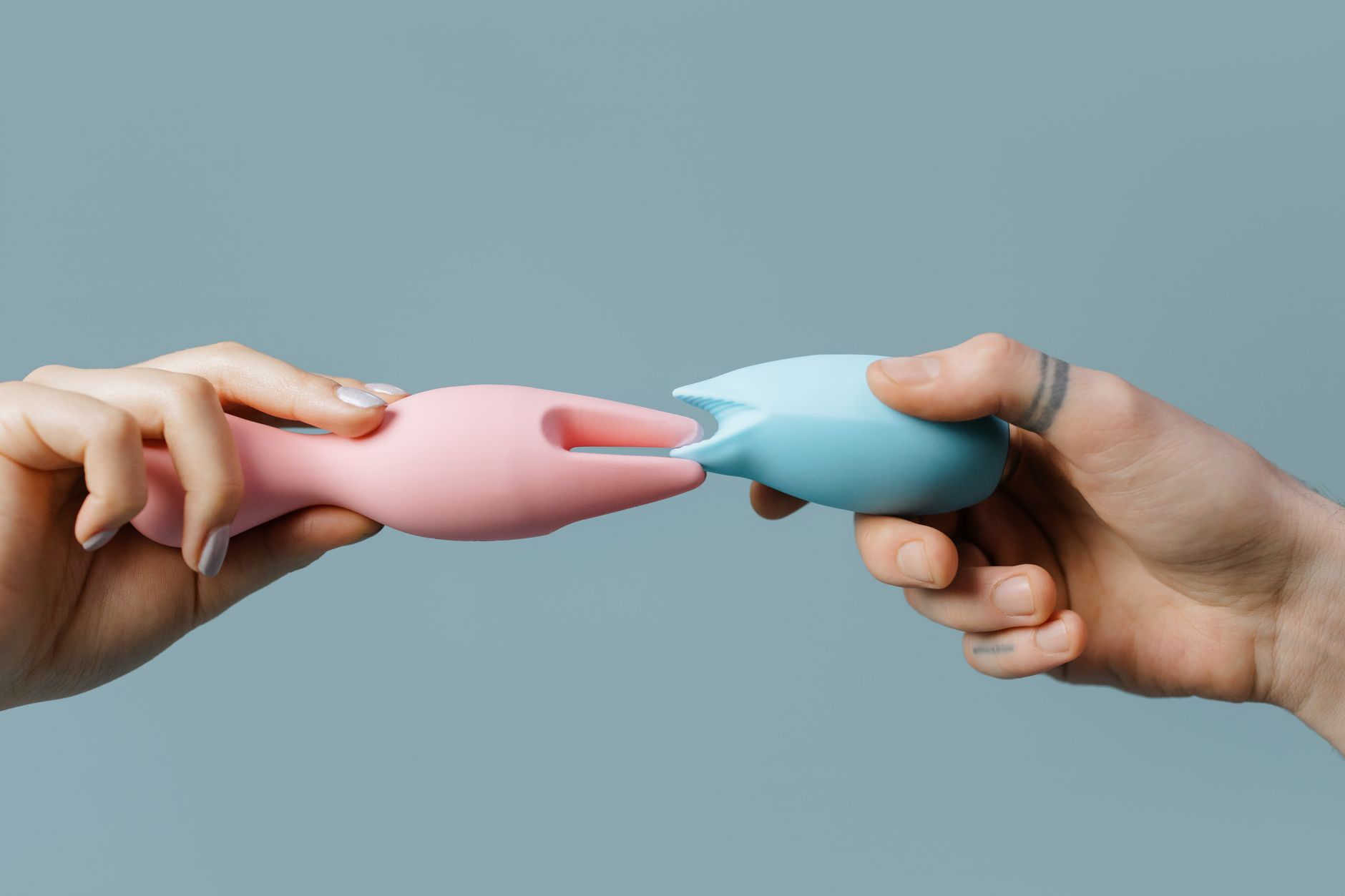
Photo by cottonbro studio on Pexels
The setup that actually works for mismatched couples
Once you've both agreed to try this, here's how to use a lemon vibrator without it feeling weird or replacing intimacy.
Scenario 1: The higher-desire partner flies solo. This is straightforward. Your partner uses the lemon vibrator when they're in the mood and you're not. They get off in private, and there's no resentment. This works best when the lower-desire partner actually knows it's happening and has given consent. Secrecy breeds distance. Openness and matter-of-fact-ness actually deepen trust.
Scenario 2: You use it together during partnered sex. This is where a lemon clitoral vibrator shines. If you're the lower-desire partner but you do want to have sex, the vibrator makes it quicker and easier to orgasm, which means you're more likely to initiate or say yes. If you're the higher-desire partner, watching your partner come is a different kind of satisfying than doing all the work yourself.
Scenario 3: You use it as foreplay. Your higher-desire partner gets off first with the vibrator. Then, if the mood is there, you have partnered sex. Or you don't. Either way, the pressure is off.
Pick the scenario that fits your dynamic. And be willing to adjust. The whole point is removing friction, not adding new rules.
The emotional piece nobody mentions
Using a lemon vibrator for desire mismatch only works if you're both willing to let go of the story that mismatched libidos mean something is wrong with the relationship. It doesn't. It means you're human.
The higher-desire partner's job is to stop taking rejection personally. It's not about you. It's not about attraction. It's about baseline needs. Full stop.
The lower-desire partner's job is to acknowledge that the higher-desire partner's needs are real and valid, even if you don't share them. And to do something about it instead of letting resentment build.
A lemon vibrator helps with the logistics. But the emotional work is on you both. That might look like <a href="/blog/how-to-use-lemon-vibrator-when-desire-feels-unbalanced-in-your-relationship">addressing what's killing desire in the lower-libido partner</a>. It might mean the higher-desire partner learning to ask differently. It might mean accepting that you'll never be perfectly matched and that's okay.
When to actually talk to someone
If using a lemon vibrator to manage desire mismatch feels like it's creating distance instead of reducing it, that's a sign you need to dig deeper. Sometimes desire mismatch is actually a symptom of something else. Resentment about emotional labor. Disconnection from feeling seen. Stress or health issues that are tanking libido. Those need conversation, not just tools.
I recommend talking to a couples therapist if the gap is wider than you can bridge with a vibrator and some honesty. That's what we're here for. And it actually works.
The other important thing: if the lower-desire partner is saying no to sex because they're being pressured or coerced, a vibrator won't fix that. That's a red flag that needs immediate attention.
The practical stuff
If you're going to use a lemon vibrator to manage desire mismatch, invest in something that actually works. A lemon clitoral vibrator with air-suction technology reaches orgasm faster and more reliably than friction-based vibrators, which matters when you're trying to bridge a gap without taking an hour.
Get water-based lubricant. Even if you don't usually need it, using a vibrator frequently can benefit from it, and it's a non-issue.
Store it somewhere both of you feel comfortable. Not hidden. Not on the nightstand where it's weird. Just accessible and acknowledged.
And here's the thing that matters most: use it without shame. If you're sneaking around with a vibrator because you're embarrassed, your partner picks up on that energy and it becomes weird. If you're matter-of-fact about it, it's just another tool you both use.
People also ask
Will using a lemon vibrator make my partner less attracted to me?
No. Attraction is complex, and solo pleasure has nothing to do with whether someone desires their partner. In fact, people who get regular orgasms tend to have higher libido overall, which often translates to better sex with partners. The risk is actually the opposite: if desire mismatch goes unmanaged, resentment kills attraction. A lemon vibrator prevents that.
Should I be in the room when my partner uses their vibrator?
That's up to you both. Some couples like watching. Some couples prefer privacy. Both are fine. The important thing is that it's chosen, not hidden. Talk about what feels right for you. It might change over time, and that's normal.
What if my partner says they're offended that I want to use a vibrator?
That reaction usually comes from fear that they're not enough. That's worth acknowledging gently. "This isn't about you. It's about my body and my needs. I want us both to feel satisfied." Sometimes you need to <a href="/blog/how-to-use-lemon-vibrator-with-a-new-partner-nervousness">work through the discomfort of introducing pleasure tools</a> together, and that takes time.
Can using a lemon vibrator actually help us have more sex as a couple?
Sometimes. If the higher-desire partner can get off independently, they feel less rejected. If the lower-desire partner knows there's an off-ramp, they're less anxious about initiating. Both of those things reduce tension, which can actually improve desire overall. But it's not guaranteed. It depends on what's really driving the mismatch.
How do I bring this up without making my partner feel bad?
Lead with curiosity and partnership, not criticism. "I care about us both feeling good. What if we explored some things that worked for our different needs?" Focus on solving a problem together, not on what your partner isn't doing.
Is it weird if we use a lemon vibrator together during sex?
Not at all. It's increasingly normal, and functionally it's brilliant. You get the pleasure of partnered intimacy plus the certainty of orgasm. That's a win.
The bigger picture
Desire mismatch is one of the most solvable relationship problems, and it's treated like it's catastrophic. A lemon vibrator won't magically make you want sex at the same frequency. But it will remove the shame and pressure that make mismatch feel like a relationship failure.
What it really does is let you both stay connected while honoring your actual needs. And that's huge. That's the difference between sex becoming a source of resentment and sex staying something you both enjoy, on your own terms.
If you're ready to have the conversation with your partner, start with honesty about how the mismatch is making you both feel. Then explore solutions together. A <a href="/blog/how-to-use-lemon-vibrators-during-sex-with-a-partner-without-awkwardness">lemon vibrator designed for partnered use</a> is one of them. And it works.