Let's start with what's actually happening
Here's the thing about perimenopause brain fog and desire: your body isn't broken. Your brain is just staging a hostile takeover.
Perimenopause scrambles your hormones in a completely different pattern than menopause does. Your estrogen doesn't drop steadily. It spikes and crashes randomly. Progesterone does the same. This hormonal chaos tanks dopamine (the chemical that makes you want things, not just tolerate them) and sends cortisol (your stress hormone) into overdrive. Your brain gets so busy managing the internal chaos that it literally forgets to be interested in pleasure.
But here's the plot twist: this is cognitive noise layered on top of an intact nervous system. Your clitoris still works. Your capacity for orgasm is still there. You're just running a browser with 47 tabs open and no RAM left.
Why brain fog specifically kills libido (not arousal)
There's an important distinction here that most conversations about perimenopause sex miss entirely.
Desire and arousal are not the same thing. Desire is the thought. Arousal is the physical response. Perimenopause brain fog murders desire on arrival. You look at your partner. You look at a lemon vibrator. You think, "That could be nice," and then your brain immediately pivots to whether you paid the electric bill, whether your kid is actually eating enough vegetables, and why you can't remember the name of the person you had coffee with last week.
Arousal itself? That often still works fine, once you can get your brain to stop narrating everything. This is actually good news. It means you don't need to wait for hormones to stabilize. You need to get your attention back into your body.
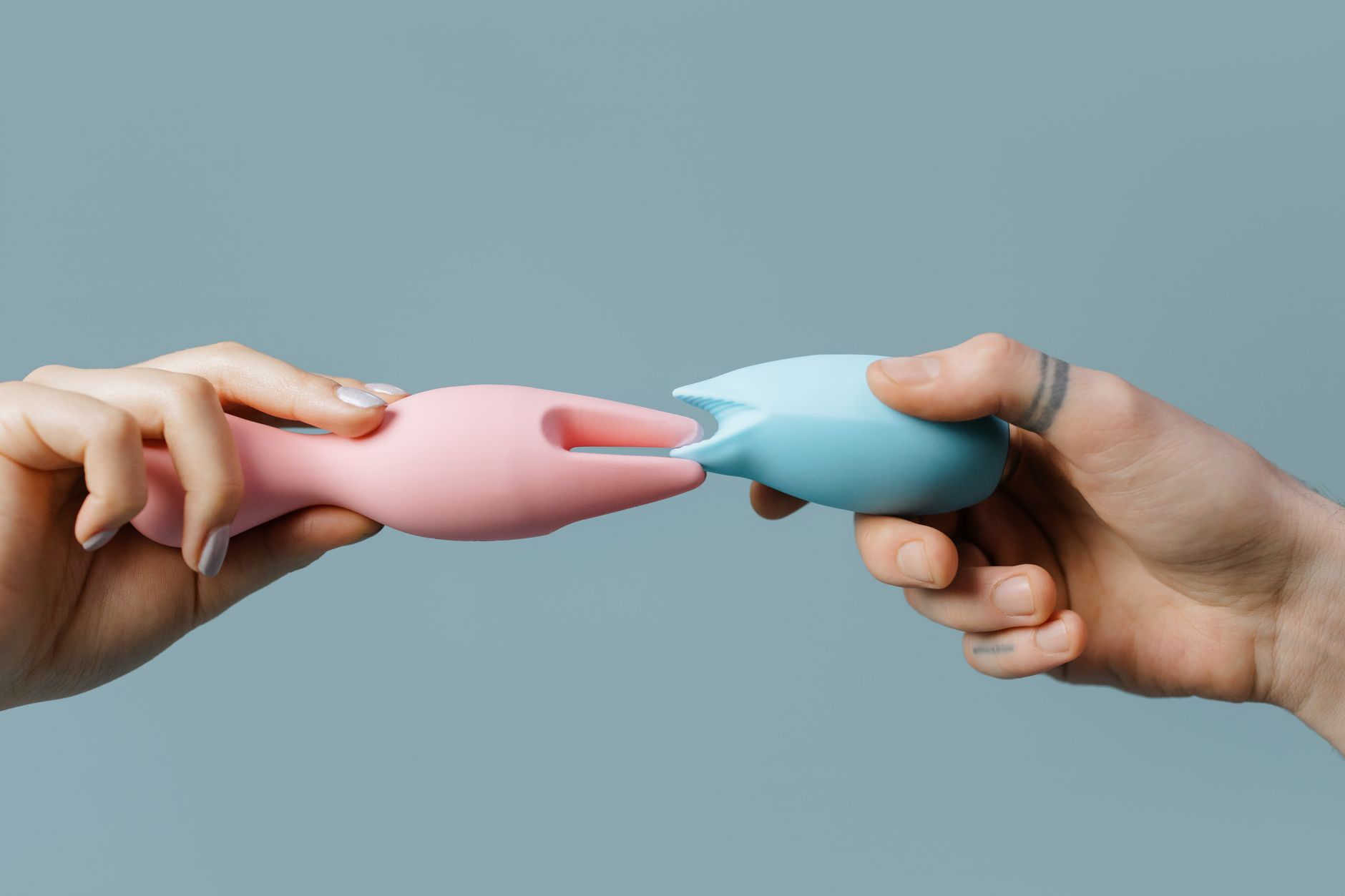
A lemon vibrator (or any clitoral vibrator, really) is wildly effective here because it's a novelty trigger. Your scattered brain doesn't have the bandwidth for fantasy or extended foreplay right now. But something that feels genuinely different? That cuts through the noise.
The perimenopause-specific brain fog problem
Perimenopause brain fog isn't regular tired. It's a specific kind of cognitive overwhelm where your executive function misfires. You start a sentence and forget the end. You walk into a room three times. You decide you're going to have sex and then forget why halfway through.
This happens because progesterone levels are swinging wildly, and progesterone is calming. When it drops, your nervous system gets twitchy. Simultaneously, your brain is processing more heat flashes, sleep disruptions, and phantom symptoms than it has bandwidth for. The frontal cortex (the part that decides you want sex) gets deprioritized because your nervous system thinks it's managing a crisis.
Add to this: perimenopause often happens during genuinely high-stress years. Career peaks, aging parents, teenagers, relationship recalibration. Your brain isn't just fogged by hormones. It's actually overloaded.
Unfortunately, that background noise doesn't disappear because you want it to. It actually gets worse if you try to force arousal while the fog is still there. This is why so many people end up giving up entirely, thinking their libido is gone. It's not gone. It's competing with a thunderstorm in your head.
How lemon vibrators cut through the fog
Here's why a lemon clitoral vibrator works better than most other tools during this phase.
First: the sensation is immediately novel and distinctive. Your scattered brain doesn't have to generate novelty through imagination. The lemon vibrator does that for you. That air-suction design creates a sensation that's fundamentally different from anything else. It's specific. It's present. It's hard to think about your calendar when something on your body is doing something you've never quite felt before.
Second: it requires minimal cognitive load. You don't need to set the mood, build a fantasy, or guide your partner. You just need to touch it to yourself. That's it. That's the entire entry point. For a brain that's already drowning in decisions and demands, that simplicity is everything.
Third: the orgasms tend to be more reliable, which matters. Perimenopause brain fog often comes with a side of "I can't quite get there." Not because the body is broken, but because the mind keeps drifting. A lemon vibrator delivers consistent, targeted stimulation that doesn't care if you're thinking about the grocery list. The physical sensation overrides it.
The strategic timing hack
Perimenopause hormonal swings aren't random, even though they feel that way. Tracking your cycle (even loosely) tells you something valuable: when your dopamine is slightly less trashed.
For most people, dopamine is highest in the first half of the cycle, especially right before ovulation. This is when you're most likely to actually want sex, not just tolerate it. In perimenopause, this window is shorter and less predictable, but it's still there.
I recommend my clients start using a lemon vibrator during this window, not during the brain-fog peaks. You're already slightly more mentally available. Add a tool that requires zero cognitive effort, and you've stacked the deck. Once you've had one or two success experiences, your brain starts associating the vibrator with pleasure, not with another task to manage. That association matters for future interest.
If you can't track your cycle (some people's cycles are too erratic in perimenopause), then just pick the times when you feel slightly more mental bandwidth. Even a few hours per month counts.
What actually helps the fog itself
I want to be real: a vibrator is a band-aid on the brain fog problem. It helps you access pleasure despite the fog. But you'll also benefit from addressing the fog directly.
Three things make the biggest difference in my practice:
Sleep, disproportionately. Perimenopause sleep is notoriously bad, and poor sleep tanks dopamine catastrophically. If you can improve sleep by even one hour per night (ask your doctor about magnesium glycinate or a short course of melatonin), your dopamine recovers visibly. This takes two to three weeks, but the effect on desire is genuinely dramatic.
Attention restoration. Your brain is fogged because it's spent. Walking outside without your phone for 20 minutes has a measurable effect on attention and dopamine. Not because it's spiritual. Because your prefrontal cortex actually recovers when it's not bombarded. More brainpower means more dopamine for desire.
Removing decisions where possible. This sounds small, but it's not. Every decision your brain makes uses dopamine. If you're meal-planning, outfit-choosing, and problem-solving all day, there's nothing left for desire. Simplify work processes. Say no to optional social events. You're not being lazy. You're reallocating resources.
Done together, these three things don't eliminate perimenopause brain fog. But they create enough overhead that you have actual bandwidth for pleasure again. A lemon vibrator + a slightly less fractured brain is the combination that works.
How to actually use the lemon vibrator when brain fog is present
Here's the practical choreography.
Don't try to have sex. Just. Don't. Perimenopause brain fog makes partnered sex frustrating because your mind will leave halfway through, and then you both feel like something went wrong. It didn't. You just ran out of mental RAM.
Instead, start solo. Five to ten minutes alone. No pressure to orgasm, no performance expectations. Just you and the lemon vibrator and the specific job of noticing what the sensation feels like. This is attention training. Your brain is so used to being elsewhere that you have to teach it to be in your body again.
Start at a low intensity. Pattern one or two. Let the sensation gather your attention gradually. Most people spend the first minute with their brain still elsewhere. That's normal. You're not failing. You're just waiting for the novelty of the sensation to interrupt the thought-loop.
Once you're actually present (and you'll know this happens because the thought-stream quiets), then you can increase intensity or play with patterns. Your brain will follow the sensation instead of wandering.
Do this three or four times before you try partnered sex again. Your nervous system needs to rebuild the connection between stimulus and presence. A few solo sessions of success teaches your brain that pleasure is available. Then partnered sex becomes easier because you already know you can be present.
When to bring a partner in
If you have a partner, the conversation matters more than the vibrator.
Your partner probably noticed that your interest in sex dropped. They might think it's about them. They might think you're not attracted anymore. They might be hurt. That hurt gets in the way of everything, including your ability to use a tool like a lemon vibrator in partnered sex.
The most useful thing you can say is something like: "My brain is really fogged right now from perimenopause. My desire for you didn't change. My ability to hold attention in my body changed. I'm working on getting that back. I want to try some things that help my brain stay present." Then introduce the vibrator as a tool for your presence, not as a replacement or a fix for them.
Most partners respond really well to this because it makes the problem concrete and fixable instead of vague and threatening. You're not saying, "I don't want you." You're saying, "I need help staying present with you."
Then, when you use the lemon vibrator together, the focus is on your pleasure and your presence. Not on whether they're doing it right. Not on whether you're going to reach the finish line. Just: does this help you stay in your body? If yes, great. Keep going. If no, try something else.
FAQ: Brain fog, desire, and lemon vibrators
Why do I lose desire specifically during the brain fog peaks instead of just arousal being slower?
Desire is a prefrontal cortex function. Arousal is more automatic and lower-brain. Perimenopause brain fog specifically impairs executive function and attention, which is where desire lives. Arousal can still happen (especially if something cuts through the noise), but the thought, "I want to have sex," disappears because that thought requires your prefrontal cortex to be somewhat clear. A lemon vibrator gives your nervous system something so novel that it bypasses the need for cognitive desire. You don't have to think, "I want this." You just feel it.
Can I use a lemon vibrator while I'm still trying to sleep better? Or should I wait until the sleep is fixed?
Use it now. Sleep takes weeks to improve, and you don't need to wait. A lemon vibrator works regardless of your sleep quality because it doesn't depend on you generating desire cognitively. The sensation does the work. Use this to rebuild your confidence that pleasure is still available, and fix sleep in parallel. Both things improve each other.
Does perimenopause brain fog always mean low libido, or can the fog exist without killing desire?
Some people sail through perimenopause with mostly intact libido. They usually have either naturally higher dopamine, lower stress loads, or both. But for most people, the fog and the desire crash happen together. Your brain is just too occupied. That doesn't mean your body is broken. It means your brain needs to be slightly less on fire before it remembers to want sex.
If I use a lemon vibrator solo, will my partner feel like I'm choosing that over them?
Only if you keep it secret or frame it that way. If you say, "I'm rebuilding my capacity to be present in my body right now, and solo time with a vibrator helps me do that. This actually makes partnered sex better when I'm ready," most partners see it as something you're doing for the relationship, not instead of it. It's a tool for your nervous system, not a replacement.
How long before the brain fog actually improves and I need the vibrator less?
Perimenopause lasts two to ten years. The intensity of fog usually peaks in the couple of years before your last period and then stabilizes. But you don't need to wait for it to disappear entirely. As soon as you have a few successful experiences of being present in your body, your brain's association with pleasure shifts. You might need the lemon vibrator less, or you might just keep using it because it feels good. Both are fine.
Is the lemon vibrator specifically better for brain fog, or is any vibrator as good?
Any vibrator can work, but a lemon clitoral vibrator has a few advantages here. The air-suction design is more novel than typical vibration, which helps break through scattered attention. It's also very specific and localized, which helps your brain actually focus on one sensation instead of being overwhelmed by too many stimuli. It's not magic. It's just more efficient at cutting through noise.
The actual picture
Perimenopause brain fog and tanked libido aren't happening because your body stopped working or because you stopped being attracted to your partner. They're happening because your brain is managing a legitimate hormonal crisis and doesn't have bandwidth left for desire. A lemon vibrator doesn't fix the fog. But it does bypass the need for cognitive desire and lets your nervous system remember that pleasure is still available.
Start solo. Give your brain a few successful experiences of being present in your body. Track where your energy is slightly higher in your cycle, and lean into that. Talk to your partner about what's actually happening instead of letting them guess. And be patient with yourself. Your brain isn't broken. It's just overloaded. Once you reduce the load slightly, everything else gets easier.