
The thing no one tells you about grief and sex
Grief doesn't just make you sad. It makes you numb. Your body withdraws into a protective crouch, and pleasure becomes something that happens to other people. The thought of wanting anything, including sex, can feel like a betrayal of the person you've lost, or just impossible because you're running on empty.
This matters because numbness isn't laziness or depression necessarily. It's a legitimate physiological response to loss. Your nervous system is in conservation mode.
What grief actually does to your body
When you're grieving, your body releases cortisol and adrenaline in patterns that keep you alert, ruminating, and depleted. Arousal requires the opposite state. Your parasympathetic nervous system (the one that handles rest and pleasure) gets shoved into the background. Blood doesn't flow where it needs to for sensation. Your brain is elsewhere.
The pelvic floor tightens as part of the stress response. Touch that normally feels good can feel intrusive or deadening. And then there's the emotional layer. Pleasure can feel wrong when someone you love is gone.
Here's what I tell my therapy clients: reconnecting with pleasure during grief isn't disrespectful to the person you've lost. It's respecting your own capacity to survive and eventually, to live again.
Why a lemon vibrator changes the game
A device like the Lem offers something that manual stimulation can't when you're numb. The air-suction pattern triggers nerve endings in a concentrated, consistent way that doesn't require you to feel present or emotionally available. You can be somewhere else entirely and your body still responds.
That matters for grief specifically. You don't need to show up psychologically. The vibrator does the work while you sit with whatever you're feeling.
Secondly, a lemon clitoral vibrator is discreet and fast. You can build sensation in five to ten minutes instead of spending thirty minutes trying to feel something that isn't coming. When you're grieving, you don't have bandwidth for long rituals. You need efficient reconnection.
Starting the conversation with your body again
The first step isn't reaching for the Lem. It's permission. Most people grieving feel guilty about wanting pleasure at all, or they're exhausted by the attempt. Give yourself explicit permission to skip this entirely if you need to. That permission is the beginning.
When you're ready, start small. Pleasure doesn't have to mean an orgasm. It can mean five minutes of sensation that feels different from the rest of your body. Lying down. Breathing. No expectation.
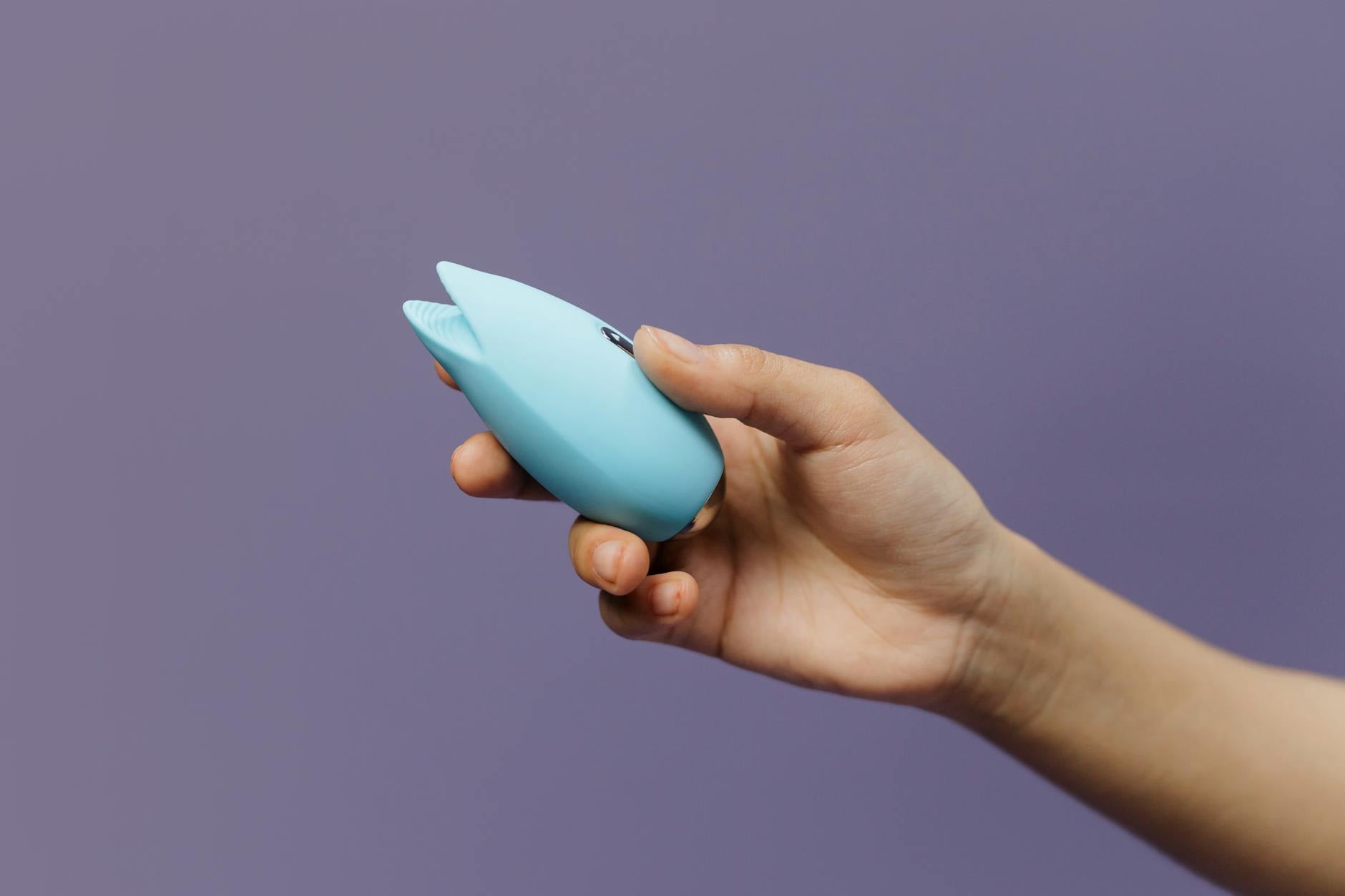
Photo by cottonbro studio on Pexels
Use the Lem on the lowest setting. You're not looking for intense sensation. You're looking for a connection point where your nervous system says "okay, I can feel something again." The suction pattern of a clitoral vibrator is gentler than buzzing in some ways because it mimics the stimulation of oral sex. Your body knows this touch. It's familiar even when you're numb.
The practical setup that works when you're grieving
You need privacy, which might mean locking a door or waiting until your partner is asleep. You need five minutes. You need water-based lube, which helps sensation travel better when tissue is less responsive.
Start clothed if that helps. Some people need the barrier. Use the Lem over your underwear first. Let your body adjust to the sensation without the intensity of direct contact. Many people find this creates just enough distance to feel safe while grieving.
The goal is consistency, not performance. Three minutes of reconnection is not a failure. An orgasm isn't the finish line. Feeling your own body remember that it can feel is the win.
When grief and numbness layer with other stuff
If you're on antidepressants alongside grief, pleasure numbness compounds. The medication is doing its job, but your body is receiving multiple signals to shut down. In this case, a lemon vibrator becomes even more valuable because it works around the medication instead of against it. You're not relying on natural arousal. You're using external stimulation to wake up nerve endings that the medication has quieted.
Likewise, if grief triggered insomnia or hypervigilance, your pelvic floor is probably clenched tight. The Lem's suction pattern actually helps release that tension over time. Repeated gentle stimulation sends a signal to your nervous system that safety is possible.
Talking to a partner about this
If you're partnered, your partner might assume you don't want them near you right now. Sometimes that's true. But sometimes you want touch that doesn't have stakes. Using the Lem while your partner is nearby, or with their help, can be a way of saying "I'm not ready for sex, but I want to remember I have a body that can feel." That's a powerful thing to share.
Or you might need to use it alone. Tell them that too. "I'm using this to reconnect with myself. It's not about us." That clarity matters.
The timeline is personal
Grief doesn't have a clock. You might feel numb for weeks and then suddenly want to have sex again. You might cycle between numbness and interest for months. Both are normal. The lemon clitoral vibrator is there when you're ready, and it doesn't judge the timeline.
What matters is that you're not forcing pleasure as a way to prove you're "better." You're gently, consistently checking in with your body and noticing what's possible today.
When to get more support
If numbness persists beyond a few months and feels like depression, talk to a therapist or doctor. Grief that hardens into anhedonia (inability to feel pleasure or interest in anything) is sometimes clinical depression layered on loss, and that deserves actual treatment.
If you want to reconnect with pleasure when you return to partnered sex after a period of grief, that's a separate conversation worth having with your partner or a sex therapist.
But for right now, in the middle of loss, reconnecting with your own body through gentle, consistent sensation with a lemon vibrator is a reasonable, actionable step toward telling your nervous system that survival includes feeling again.
People also ask
Is it normal to lose the desire for sex when grieving?
Completely normal. Grief activates your stress response, which suppresses arousal and pleasure. Your body is conserving energy for processing the loss. There's nothing wrong with you or your relationship. It's a physiological and emotional response to trauma.
How long does it usually take to feel pleasure again after losing someone?
There's no standard timeline. Some people reconnect with pleasure in weeks. Others take months. It depends on the closeness of the relationship, the nature of the loss, your support system, and how your nervous system processes stress. Pushing yourself isn't helpful. Gently checking in is.
Can using a lemon vibrator help if I feel guilty about having pleasure while grieving?
Yes. A clitoral vibrator lets you reconnect with sensation in a low-pressure way. You're not performing for a partner. You're not trying to prove anything. It's just your body, sensation, and time. That combination often quiets the guilt because you're doing this for yourself, not anyone else.
What if I feel nothing even with the Lem on the highest setting?
Turn it off. Your numbness is protecting you. Pushing harder doesn't fix it. Give yourself permission to put the vibrator away for a few weeks and try again. Sometimes the pressure to feel something makes the numbness worse. Removing that pressure paradoxically makes reconnection possible.
Should I tell my partner I'm using a lemon vibrator to process grief?
That depends on your relationship. Some couples benefit from transparency. Others prefer privacy during grief. There's no rule. What matters is that it's honest. If you want to share, frame it as "I'm checking in with my body. This is for me right now." That's true and complete.
Can I use a lemon clitoral vibrator if grief has made my pelvic floor really tight?
Yes, actually better than manual stimulation. The gentle suction pattern of the Lem triggers release in tight muscles over time. Start on setting 1 or 2. You're not trying to feel pleasure yet. You're loosening the nervous system's grip. That's progress.