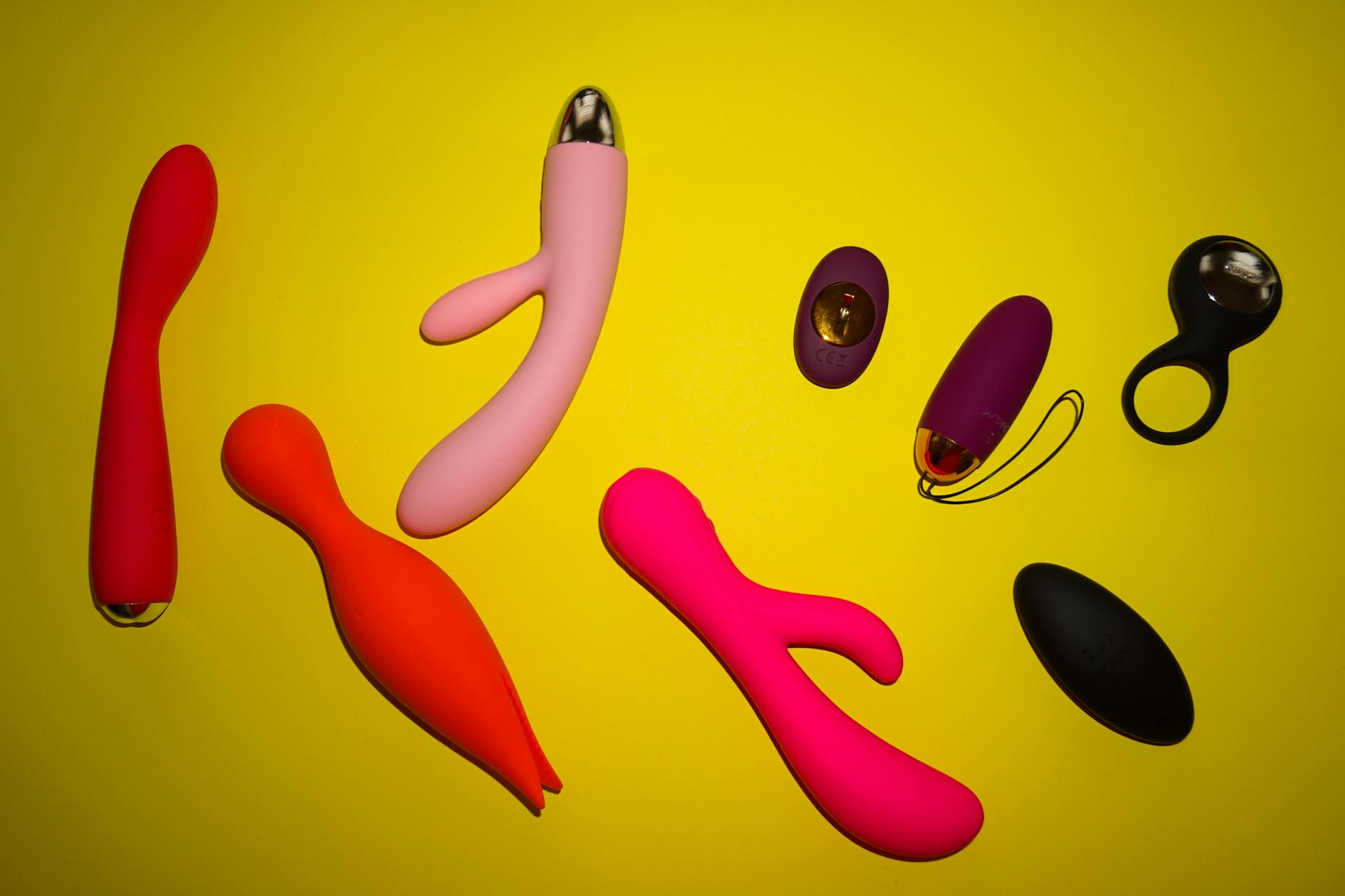
When your partner won't talk about sex
Let's be real. There's a specific kind of loneliness that comes from being coupled with someone who won't discuss pleasure. Not someone who doesn't like sex, or who's tired, or dealing with their own stuff. Someone who literally won't acknowledge that the conversation exists. The silence becomes its own problem.
You end up doing one of three things: you stop initiating, you initiate and feel rejected before they even say no, or you start resenting them for leaving you to manage all the vulnerability alone. None of those options feels good, and none of them close the gap.
Here's what I see clinically: often, the partner who avoids these conversations isn't avoiding you. They're avoiding shame. Shame about their own desires, or shame about not having them, or shame about not knowing how to talk about something this intimate. A lemon vibrator won't fix that directly, but it can create a pathway that bypasses all that defensive language.
Why this particular barrier shows up
People avoid sex conversations for predictable reasons. Sometimes it's upbringing. Sometimes it's a past relationship where talking about pleasure went badly. Sometimes they're genuinely unsure whether their desires are normal, so they've decided it's safer not to name them at all.
What I notice is this: the avoidance often masks a real question underneath. "What if I'm not good enough?" or "What if I want something weird?" or "What if I tell you and you leave?" The surface conversation about pleasure is actually a conversation about safety and worth.
This is important because it means you can't shame someone into speaking up. You also can't force vulnerability. What you can do is create conditions where the conversation feels less scary. That's where the lemon clitoral vibrator comes in. It's not about the toy itself. It's about what the toy signals.
The thing a lemon vibrator communicates
When you introduce a vibrator into your intimate life with a partner who won't talk about pleasure, you're sending a specific message: "This isn't about you being inadequate. This is about expanding what we do together." That's different from every other signal they might be picking up.
If you've been initiating sex and getting rejected, they might assume the vibrator means you're frustrated with them. If they're anxious, they might assume it means you want someone else. That's why how you introduce it matters desperately.
The best moment isn't during sex. It's during a calm conversation where you're not already vulnerable. You might say something like: "I've been thinking about trying something new. Not because anything's wrong, but because I want to feel more sensation. I'd like to explore this with you, even if you're not using it yourself." Notice what that does. It centers your pleasure, not their performance. It invites participation without demanding it.
A lemon vibrator from My Lemon Sex Toy is good for this because the design itself is playful. It doesn't look medical or intimidating. It looks like something someone designed because they were thinking about what actually feels good. That makes it easier for your partner to see it as an invitation, not a threat.
How to actually use it together (if they're willing)
If your partner agrees to be present while you use it, that's step one. They don't have to participate. They just have to be there. Many people who won't talk about pleasure have never actually watched a partner experience pleasure intentionally. It changes something in them.
Start slow. Use your lemon vibrator on your own for a few minutes first. Let them see what it looks like, hear what it sounds like. The lem vibrator has a suction mechanism that's quiet enough to talk through, which matters. You're not creating a wall of noise between you. There's still space for conversation.
Then, if it feels right, invite them to watch more closely. You might place their hand on your thigh so they can feel your body responding. You might ask them to tell you what they notice. This keeps them engaged without requiring them to do anything they're not comfortable with yet. You're building comfort incrementally.
Many people find that after watching their partner have genuine pleasure, the defensive wall softens. It's hard to stay in your head about shame when someone you love is experiencing real sensation right in front of you. Sometimes, after a few times, they'll ask questions. "Does it feel good?" or "Can I try?" That's the door opening.
If they still won't participate
Listen. Not every partner is going to suddenly become chatty about sex just because you introduced a vibrator. Some people's nervous systems are wired for avoidance, and they need professional help to rewire that. That's not failure. That's data.
If your partner consistently refuses to engage, even in the low-pressure way I've described, you're looking at a bigger conversation. Not about the toy. About whether you can live in a relationship where one person manages all the emotional labor around intimacy. When desire feels unbalanced in your relationship, that imbalance usually extends beyond just sex.
It might be time to suggest couples therapy. Frame it the same way you framed the vibrator. "I care about us. I want us to be able to talk about this stuff. I think we need help learning how." A good therapist trained in couples work can create the safety that your partner needs to drop the defensive shell.
You might also need to have a conversation about what you need. "I need us to at least try to talk about our sex life. That doesn't mean we have to be experts. It means we both show up." That's not selfish. That's a boundary, and boundaries are how relationships stay functional.
The long game: rebuilding from here
If your partner is starting to soften, even slightly, you're in a different position now. You have momentum. Use it carefully.
Don't suddenly demand all the conversations. Instead, weave them in naturally. After you've used your lemon vibrator and your partner has watched, you might say: "That felt really good. I liked that we did that together." That's not a discussion. That's a reflection. It's low-stakes observation that invites them to contribute if they want to.
Over time, these small moments add up. Your partner starts to see that talking about pleasure doesn't have to be a performance. It can just be information. "I prefer the lower settings today" or "I liked it when you did that" become normal things you say, not massive vulnerability events.
If they start to reciprocate, don't push for deep disclosure immediately. Some people warm up by sharing small preferences first. "I think I'd like to try that thing you mentioned" is a massive step if they're someone who normally says nothing. Treat it like the big deal it is.
You might also find that using a lemon sexual toy solo, without your partner present, gives you confidence that translates into the relationship. When you know your own body well enough to have opinions about what feels good, you're harder to silence. Partners feel that shift, even if they don't talk about it.
When to get professional support
Sex therapists and couples counselors are not just for people having affairs or considering divorce. They're for people stuck exactly where you are right now. How to use a lemon vibrator when pleasure feels rushed or performative covers some of that ground, but if your partner won't even begin exploring with you, that's the moment to consider outside help.
A therapist can help your partner understand where the shame comes from. They can teach you both how to have conversations about intimacy without triggering defensiveness. They can give you a framework that makes talking about pleasure feel like something you're doing together, not something you're demanding from them.
It's not magic, but it's evidence-based. People who get couples therapy around sexual communication see real improvement in a few months.
The hard truth
Some partners will never be comfortable discussing pleasure, even with help. If you've tried the vibrator approach, you've suggested therapy, and they're still refusing to engage, you're looking at a real incompatibility. That doesn't make either of you bad. It just means your needs aren't aligned.
You deserve to be in a relationship where pleasure is something you can talk about. Not every relationship allows that, and staying in one that doesn't will eventually cost you more than the discomfort of having a difficult conversation now.
The lemon clitoral vibrator is a tool, and like all tools, it works best when both people are willing to pick it up. If your partner is, you have something to build with. If they're not, that's information too. Use it wisely.
FAQ
Can introducing a vibrator make my partner feel inadequate?
Absolutely, if you don't introduce it thoughtfully. The key is positioning it as something for you, not a replacement for them. "I want to feel more" is different from "you're not enough." Frame it as expansion, not substitution. And give them time to adjust to the idea before using it in front of them.
What if my partner gets angry or shuts down when I mention the vibrator?
That's data. Strong reactions usually mean something deeper is happening. Their anger might be about shame, rejection, or past experiences with partners and sex toys. That's not something a vibrator will fix. It's something that requires conversation, and possibly a therapist. Don't push past the anger. Pause, and ask them what specifically is making them uncomfortable.
Should I hide the vibrator if they don't want to know about it?
No. Hiding it creates shame and secrecy, which are already problems in your relationship. If you can't keep a vibrator in your own nightstand without fear, that's a trust and boundaries issue worth addressing. You deserve privacy and autonomy over your own body and pleasure. That said, you also deserve a partner who's willing to have grown-up conversations about it.
If my partner won't watch me use the vibrator, does that mean the relationship is over?
Not necessarily. But it might mean you need help. A therapist can explore what's driving their refusal. Some people need very small steps. Some people need to understand that their partner's pleasure is separate from their own adequacy. Sometimes that understanding only clicks with professional support.
Can my partner use the lemon vibrator on me if they won't talk about pleasure?
They can, but there's a risk. If they're using it while still avoiding all conversation about pleasure, you might end up feeling like the vibrator is a substitute for intimacy, not an enhancement to it. The best use case is when both partners are willing to acknowledge what's happening. Without that, it can feel like going through motions.
What if I've tried everything and my partner still won't budge?
Then you have a choice to make. Stay in a relationship where a core human need (to be seen, to have pleasure acknowledged, to talk about intimacy) goes unmet. Or have the conversation about what you actually need and whether this relationship can provide it. Neither choice is easy, but one of them is honest.
The real thing
Your partner's avoidance is not your job to fix. It's their work to do, ideally with professional support. What you can do is create conditions where the work becomes possible. A lemon vibrator, used thoughtfully, is one of those conditions. It's a concrete thing in the room that says "pleasure exists and it matters." Sometimes that's enough to shift something that's been stuck for years.
If it's not, that's information too. And that information is valuable, even if it's hard.