
Here's what nobody tells you about mismatched desire
One partner wants sex three times a week. The other would be fine with once every two weeks. Nobody's broken. Nobody's wrong. But if you're living in that gap, it feels like a problem.
The partner who initiates more often starts keeping score. The partner who initiates less starts feeling pressured and shuts down further. Both feel rejected. Both feel like failures. And here's the thing: a lemon vibrator isn't going to magically align your desire cycles. But it can change the entire dynamic of how you approach each other, especially if you're the one being approached more.
Why initiation mismatch hits different than other desire gaps
When one partner wants sex more often, the sex you do have often revolves around their timing, their arousal arc, their needs. The less-initiating partner ends up in a reactive role, and reactive sex doesn't feel great. You're not building your own anticipation. You're not exploring what you actually want. You're responding to someone else's request.
Over time, this teaches your body to associate sex with obligation rather than pleasure. Your nervous system learns: sex means I need to get ready fast, perform well, be responsive. That's a recipe for lower desire, not higher. It's a self-fulfilling prophecy.
A lemon clitoral vibrator changes this because it lets you reclaim initiation on your own terms. Not as a performance for your partner, but as genuine exploration of your own body.
The solo practice that shifts everything
Here's what I recommend to couples in this situation: spend two to three weeks using your lemon vibrator entirely alone.
Not as a replacement for partnered sex. Not as a way to "get ahead" on your desire so you're more available. Just as solo pleasure with zero expectation that it leads anywhere.
Start with fifteen to twenty minutes. Use it the way you'd use it if your partner didn't exist. Low intensity first. Take time to figure out what actually feels good to you, separate from what might feel good to your partner or what you think should feel good.
Most people in the less-initiating role have never done this. They've learned their pleasure through partnered sex, which means it's always been shaped by someone else's feedback. This is your chance to get curious on your own.
After two or three weeks of solo practice, something shifts. You start recognizing when you're actually aroused versus when you're just complying. You understand your own desire signals. And that's when partnered sex changes. You become a half of the dynamic instead of a responder to it.
When to bring your lemon vibrator into partnered play
Once you've spent time with it solo, introducing it together becomes an entirely different conversation. You're not asking your partner to help you get aroused faster or more reliably. You're saying: here's something that makes me feel good, and I want to explore it with you.
The first time, keep it simple. Let your partner watch. Not in a performance way, but in a connected way. They see you touching yourself, they see what makes you move differently, they see your actual pleasure response.
This does two things. First, it shifts the initiation dynamic. You're inviting them into your pleasure, rather than responding to theirs. Second, it gives them concrete information about what works for you, which makes future sex easier and hotter for both of you.
If your partner also enjoys clitoral stimulation, lemon vibrators work beautifully for partnered use. The suction pattern on a lemon clitoral vibrator is different from a partner's mouth or hands, which means it feels novel and creates variety. Variety increases arousal, especially if you've been in a reactive pattern for a while.
The conversation that has to happen first
Here's the hardest part: you need to actually talk about this, and most couples avoid it.
The partner who initiates more often often interprets "I need solo time with my vibrator" as rejection. They hear: you don't want me. That's unfair to you, but it's real. So you need to name the actual dynamic before you introduce the lemon vibrator.
Something like: "I've noticed that I wait for you to initiate, and then I feel reactive instead of interested. I want to understand my own desire better so that when we're together, I'm actually present and wanting it, not just saying yes. This isn't about you. It's about me reclaiming my own sexuality."
That's different from "I need more space" or "I'm not as interested in you." It's specific. It's about your own pleasure, not about their failure.
Your partner might still feel a sting. That's okay. But they'll also understand that what you're doing is actually making the relationship better, not worse.
What to expect when you use your lemon vibrator solo, regularly
Three things usually happen:
First, you'll feel more confident about your own body. Confidence is attractive. Your partner will notice.
Second, your desire will actually go up. Not because you're stimulating yourself into wanting sex, but because you're removing the pressure and shame that was suppressing it. Desire thrives in freedom. It dies in obligation.
Third, the sex you do have with your partner will be different. You'll have opinions. You'll ask for things. You'll move differently because you know what you like. This means your partner has to pay attention instead of defaulting to a familiar routine.
Some partners find that incredibly hot. Some partners feel like they've lost control and push back. If it's the latter, that's a bigger relationship issue than mismatched desire, and it might be worth talking to a couples therapist.
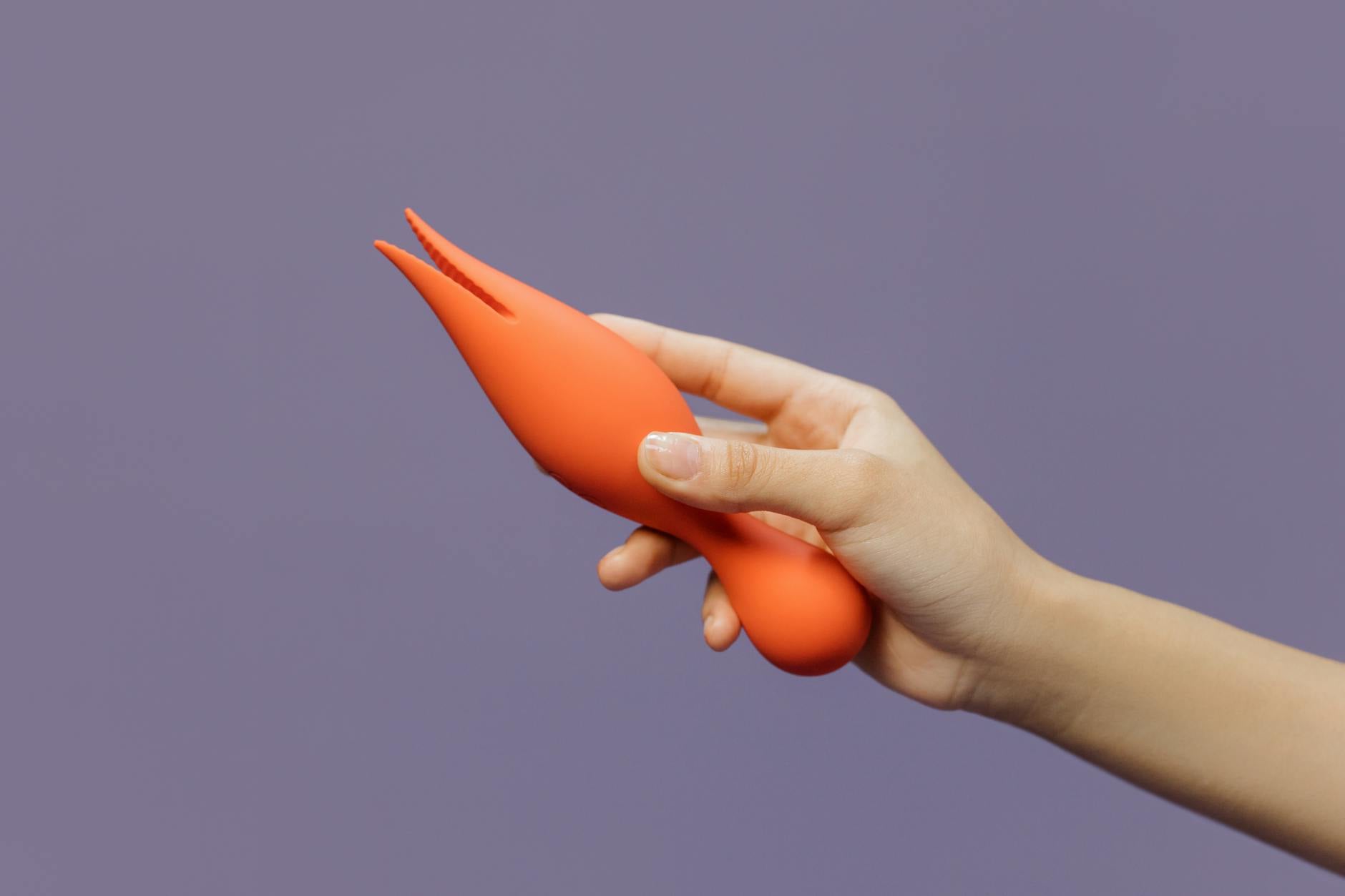
Photo by cottonbro studio on Pexels
How to avoid turning your lemon vibrator into a band-aid
Here's what doesn't work: using a lemon clitoral vibrator as a way to get yourself more aroused so you can meet your partner's initiation needs halfway. That's still reactive. That's still obligation wrapped in new packaging.
The point of reclaiming your pleasure is actually reclaiming it. For you. Not as a compromise measure.
If you find yourself thinking "I'll use my lemon vibrator before they get home so I'm more in the mood when they initiate," pause. That's the old pattern in a different costume.
Instead, think: I'm going to explore what I actually want, and then I'm going to tell my partner about it. Some nights that might mean initiating. Some nights it might mean saying no because I'm genuinely not interested. Both are valid.
When mismatched desire is actually a sign of something deeper
Sometimes lower desire isn't about desire at all. It's about resentment, or exhaustion, or feeling unseen in other parts of the relationship.
If you've been reactive in bed for years, you might discover that once you start using a lemon vibrator solo and feeling your own pleasure, you realize you're actually angry at your partner. Or you realize you're depleted and need more help with emotional labor. Or you realize you're just not that attracted to them anymore.
All of those are real. And a lemon vibrator won't fix any of them, because they're not actually about sex.
If that's your situation, the solo practice with your vibrator is still valuable, but it needs to be paired with actual conversation about the relationship. Maybe a couples therapist. Definitely honesty about what's really going on.
If, on the other hand, the initiation mismatch is the main issue and the rest of your relationship is solid, a lemon clitoral vibrator can genuinely shift the dynamic. You reclaim your own pleasure. You stop feeling reactive. You become a full partner again instead of a responder. And that changes everything.
Frequently asked questions
Can using a lemon vibrator solo make me want sex more often?
It can, but that's not guaranteed, and it's not the goal. What's more likely is that you'll want sex on your own terms more often, which feels different. You might initiate twice a week instead of once every two weeks, but you might also say no sometimes without guilt. The shift is toward authentic desire, not higher frequency.
Will my partner feel threatened if I use a lemon clitoral vibrator solo?
Possibly, especially if they're already feeling rejected by lower initiation. That's why the conversation matters so much. Frame it as something that helps you feel more connected to your own pleasure, which ultimately benefits both of you. Some partners need reassurance that solo use isn't a replacement for partnered sex. Be clear and specific.
How often should I use my lemon vibrator if I'm in the less-initiating role?
Start with two to three times a week for those first few weeks of solo practice. Once you feel more connected to your own desire, you can adjust based on what feels natural. There's no "right" frequency. The goal is regular enough that you develop a real relationship with your pleasure, not sporadic enough that it feels like a chore.
What if my partner wants to join me right away instead of letting me explore solo?
That's a conversation. You might say something like: "I need a little time to figure this out on my own first. Once I understand what I like, I'd love to share that with you." If your partner pressures you to make it about them immediately, that's a sign that the initiation mismatch might be about control, not just desire. Worth exploring.
Does a lemon vibrator actually help with desire discrepancy long-term?
It helps with the dynamic that created low desire in the first place. If your desire was lower because you were always reactive and never exploring your own pleasure, then yes, a lemon vibrator can genuinely help. If your desire is lower for other reasons, the vibrator is a helpful tool but not a solution on its own.
Can we use a lemon clitoral vibrator together if we have different desire levels?
Absolutely. In fact, it can be a great bridge. The less-initiating partner uses it solo first, then introduces it into partnered sex. It gives the more-initiating partner something new to explore together, which can feel exciting for both people. It's collaborative instead of negotiated.
What changes when you stop being reactive
Mismatched desire doesn't have to mean your relationship is broken. It just means you need to approach intimacy differently.
When you use a lemon clitoral vibrator as a tool for understanding your own pleasure, not as a workaround for your partner's needs, something shifts. You feel more powerful. You feel more seen by yourself. And when you feel genuinely good in your own body, partnered sex becomes something you want, not something you manage.
That's the change that actually matters. Not matching your partner's initiation frequency. Just reclaiming your side of the dynamic.
Ready to explore what your body actually wants? Start with solo time. Let yourself be curious. And then bring that knowledge to your partner. That's how this works.