
Let's be real about the gap
There's a moment that happens in long-term relationships where partnered sex becomes the only sex you're allowed to want. Not explicitly forbidden, but culturally discouraged. Solo play gets reframed as a sign that something's missing. That you're not satisfied. That you should want your partner to be enough.
Except your body doesn't work that way. And neither does pleasure.
Why solo sensation matters in partnered life
Here's what clinical observation shows: people who maintain solo pleasure practices report higher satisfaction in partnered sex, not lower. Not because partnered sex is inadequate, but because they stay connected to their own arousal independent of another person's timing, mood, or agenda.
That matters. Solo play is where you learn your body's language. It's where you can spend thirty minutes on sensation without worrying about performance. It's where you discover what actually makes you come, versus what you've been taught should make you come.
When you step back into partnered sex from that grounded place, you bring something your partner can't give you. Confidence. Clarity. An actual preference instead of a compliant response.
The solo-partnered rhythm in practice
You don't have to choose. Real sexual health means moving fluidly between both.
Some couples find rhythm: solo play on Tuesday and Thursday, partnered on weekends. Some integrate both in the same session. Some do neither for weeks, then one person needs solo time to reset, and they take it without apology.
Lemon clitoral vibrators like the one My Lemon Sex Toy makes work particularly well for this because they don't require a partner's participation or presence. The sensation is entirely yours to control. Speed, pressure, timing, intensity. You're not waiting for someone else to hit the right angle or check in. You're not managing another person's stamina or desire.
Building a solo practice that doesn't feel like substitution
The mental shift matters more than the physical one. Here's what I recommend to couples navigating this.
First: establish that solo play is maintenance, not replacement. Framing is everything. You're not having solo sex because partnered sex is failing. You're having solo sex the same way you brush your teeth. It's part of staying connected to yourself.
Second: pick a time and stick to it. Consistency transforms solo play from something you do when your partner's asleep (which carries residual shame) into something you do as a regular part of your life. Wednesday night. Sunday morning. Once a month. Whatever rhythm works for you.
Third: use the same toy every time. A lemon vibrator becomes familiar to your body. Your nervous system learns it. You develop preferences about patterns, speed, positioning. That accumulated knowledge builds into something deeper than novelty.
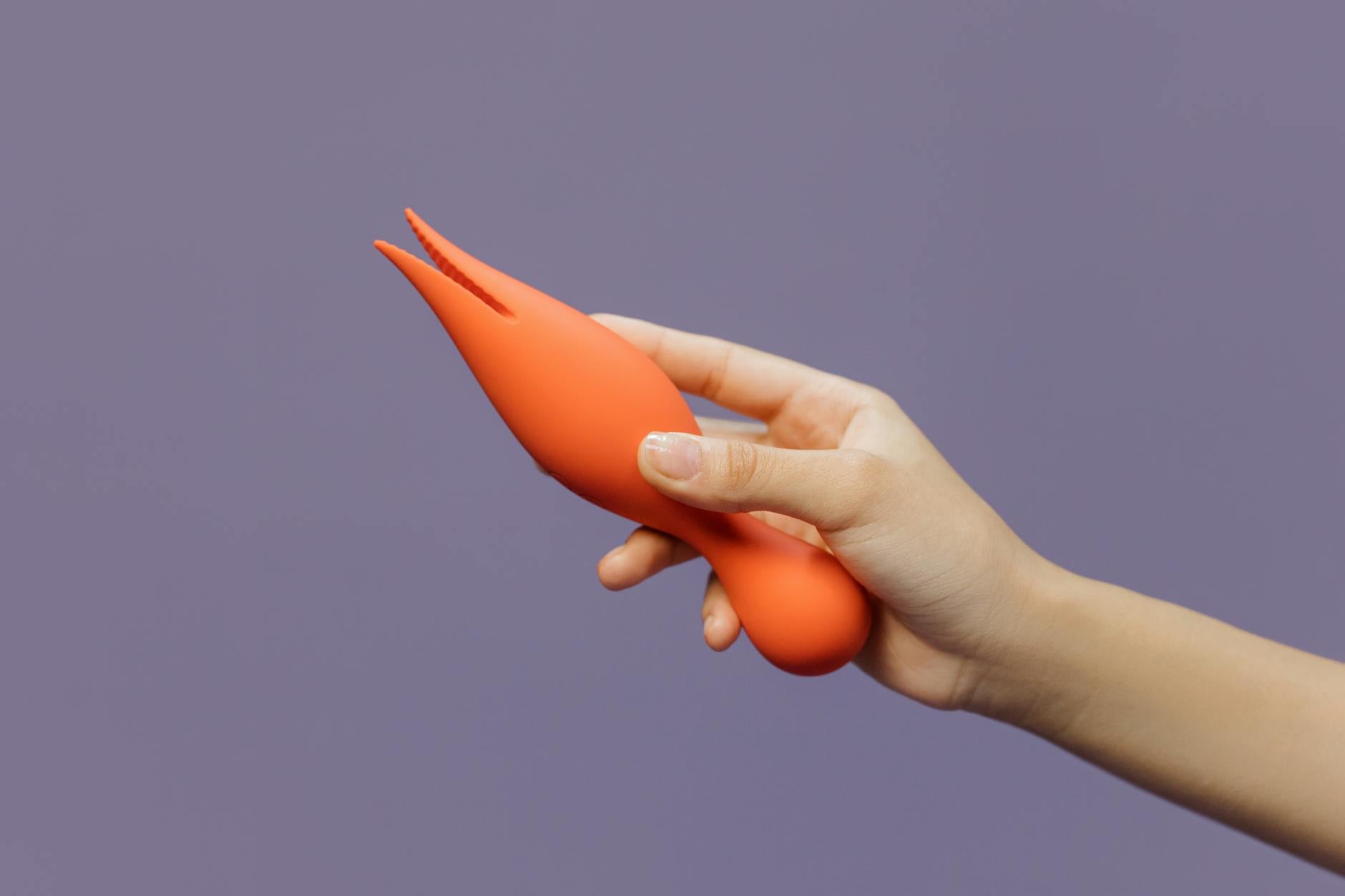
Photo by cottonbro studio on Pexels
What changes when you return to your partner
Most couples don't realize what they're missing until they try this. Solo play shifts something small but measurable in how you show up during partnered sex.
You know what you want. You can communicate it. You're not discovering your body's preferences during the moment when your partner's asking "does this feel good," which splits your attention between sensation and performance.
You can also genuinely feel the difference between solo sensation and partnered sensation. They're not better or worse. They're different. Solo play gives you quiet control. Partnered sex gives you presence with someone else. Both have real value.
For some people, having solo pleasure becomes an actual turn-on in partnered sex. Knowing you're keeping that part of yourself separate and maintained. Knowing your partner isn't responsible for your entire pleasure picture.
When to talk about this with your partner
Honestly though: have the conversation before you start a solo practice, not after they find out. You don't need permission. But you do need to de-shame it.
A good opening: "I've been thinking about starting solo time as part of taking care of myself. Not because anything's wrong with us, but because I want to stay connected to my own body independent of our partnered life. I wanted you to know that's coming."
Most partners respond with relief. Especially if they've also felt the pressure that they need to be your entire sexual world.
If your partner responds with insecurity or jealousy, that's a different conversation. One worth having, ideally with a therapist. Because the issue isn't the lemon vibrator. It's about control, trust, or beliefs about what partnership requires.
Building consistency with the right tool
A lemon sucker style toy helps because the stimulation is consistent and requires minimal effort. You're not managing intensity the same way you would with a traditional vibrator. The sensation builds gradually. Your body learns to trust it.
Start with pattern one or two at lower speeds. Your solo time is when you can experiment without anyone else's rhythm. Some people discover they prefer longer build-ups. Some need sharp, fast sensation. Solo play is where you find out.
The deeper shift
When you maintain solo pleasure alongside partnered sex, something shifts in how you relate to yourself. You're not outsourcing your arousal. You're not making your partner responsible for your entire pleasure picture. You're staying in relationship with your own body.
For people in long-term partnerships, this often becomes the missing piece. The thing that was quietly eroding satisfaction wasn't the partnership. It was the abandonment of their own pleasure as a solo thing. Solo play with a lemon clitoral vibrator becomes the reset button. The place you go to remember that pleasure is yours first.
People also ask
Is using a vibrator solo while in a relationship considered cheating?
No. Solo pleasure is self-care, not betrayal. It's not about anyone else. Your partner's presence or absence doesn't change that your body deserves attention and pleasure. If your partner has taught you to feel guilty about solo play, that's worth examining. Pleasure that's entirely yours to give yourself isn't infidelity. It's autonomy.
How often should I use a lemon vibrator if I'm also having partnered sex?
There's no right frequency. Some people do solo play once a week. Some once a month. Some several times a month. What matters is consistency and intentionality. You're not trying to hit a quota. You're maintaining a practice that keeps you connected to your own body. If solo play starts feeling obligatory, scale back.
Will my partner feel threatened if I have a solo pleasure routine?
Possibly. But that's often more about their own relationship to pleasure than about what you're actually doing. A partner who feels insecure about solo play might need reassurance that this doesn't mean partnered sex isn't enough. You might also need to examine whether their insecurity is reasonable or whether they're trying to control your relationship to your own body. The conversation matters.
Can I use lemon vibrators during partnered sex and solo play?
Yes. The same toy works in both contexts. Some couples find that using a lemon clitoral vibrator during partnered sex actually enhances connection because neither partner is carrying the entire responsibility for arousal. You're each contributing to the pleasure in different ways. That can actually feel more collaborative than trying to do everything manually.
How do I introduce solo play to my partner if we've never talked about it?
Start simple: "I want to explore solo pleasure as part of taking care of my body. It's not about anything being wrong with us." You don't need to over-explain. You also don't need permission. But transparency prevents resentment. If your partner responds poorly, that's valuable information about how much control they believe they should have over your sexuality.
What if my partner wants me to stop solo play?
That's a boundary violation. You have the right to pleasure that's entirely yours. If your partner is trying to control your solo sexual expression, that's worth examining in therapy. A healthy partnership includes space for individual sexuality alongside partnered sexuality. If your partner can't hold both, that's a relationship issue worth addressing with support.
The practice
Here's the thing nobody tells you: maintaining solo pleasure while in a long-term partnership is an act of self-respect. It says you're not abandoning your body in service to partnership. You're holding onto yourself.
A lemon vibrator becomes the tool that makes that possible. Consistent. Reliable. Entirely yours. Use it regularly. Build a practice. Stay connected to what your body actually wants. Then bring that clarity and confidence back to your partnership.
That's not betrayal. That's integration.