
Here's the thing about traditional vibrators
They buzz. That's it. They vibrate at a fixed frequency, usually between 5,000 and 10,000 Hz, which means your clitoris is absorbing thousands of micro-impacts per second. Over time, those impacts fatigue your nerve endings. The sensation dulls. You need more intensity. Eventually, you can't feel much of anything without cranking it to a setting that feels almost aggressive.
That's not a personal failure. That's neuroscience.
Your clitoral nerves have a phenomenon called habituation. Constant stimulation in the same pattern triggers something called sensory adaptation, where receptors become less responsive to repeated input. Think of it like listening to the same song on loop. Your brain stops processing it as novelty. Your body does the same thing with vibration.
What makes lemon vibrators fundamentally different
Lemon clitoral vibrators, including designs like the Lem, use air-suction technology instead of simple vibration. Instead of buzzing at a fixed frequency, they create rhythmic pulses of gentle suction that mimic a specific kind of stimulation that humans evolved to respond to. This is important: suction doesn't numb you. It wakes you up.
The mechanism is this. When you apply suction to the clitoris, you're not just stimulating the surface nerve endings. You're engaging deeper nerve pathways, including the ones that respond to pressure and stretch. You're also drawing blood into the tissue, which increases sensitivity rather than fatiguing it. The suction creates a seal, applies gentle negative pressure, then releases. Repeat. Your nervous system registers this as novel stimulation even after multiple uses because the pattern itself is more complex than simple vibration.
The neuroscience of suction versus vibration
Your clitoris has roughly 8,000 nerve endings concentrated in a space smaller than a pea. About 1,500 of those are dedicated specifically to pleasure. These nerves fall into two main categories: mechanoreceptors that respond to pressure and movement, and others that respond to temperature and texture.
Traditional vibrators primarily activate one type of mechanoreceptor at one frequency. The Lem and other lemon vibrators activate multiple receptor types simultaneously because suction involves pressure, stretch, and rhythmic pulsing. Your nervous system processes this as richer, more complex input.
Here's what happens in real time. When suction hits your clitoris, you get a flood of sensory information. Pressure receptors fire. Stretch receptors activate. The rhythmic pulsing creates a temporal pattern that your brain is wired to find intensely pleasurable. Even if you use the device daily, you're giving your nerves different types of input, so they don't habituate the same way they do with standard vibration.
Why numbness happens and how lemon vibrators prevent it
Numbness from vibrators isn't random. It's a predictable outcome of overstimulation to one set of nerve endings. When you apply high-frequency vibration to the clitoris for extended periods, two things happen: the mechanoreceptors in that area temporarily desensitize (they stop firing as readily), and the repeated micro-trauma can cause minor inflammation, which further dulls sensation.
Suction-based lemon clitoral vibrators avoid this because they're not relying on brute-force frequency. The Lem, for instance, works at lower frequencies with intermittent pulses rather than constant buzzing. This means less overstimulation of any single nerve ending and more time for your receptors to stay responsive.
If you've experienced numbness with traditional vibrators, switching to a lemon sexual toy isn't just a preference upgrade. It's a reset for your nervous system. Many people report that their first experience with suction technology feels almost shocking in its intensity, even at moderate settings, because their clitoral nerves are suddenly getting stimulated in a way they recognize again.
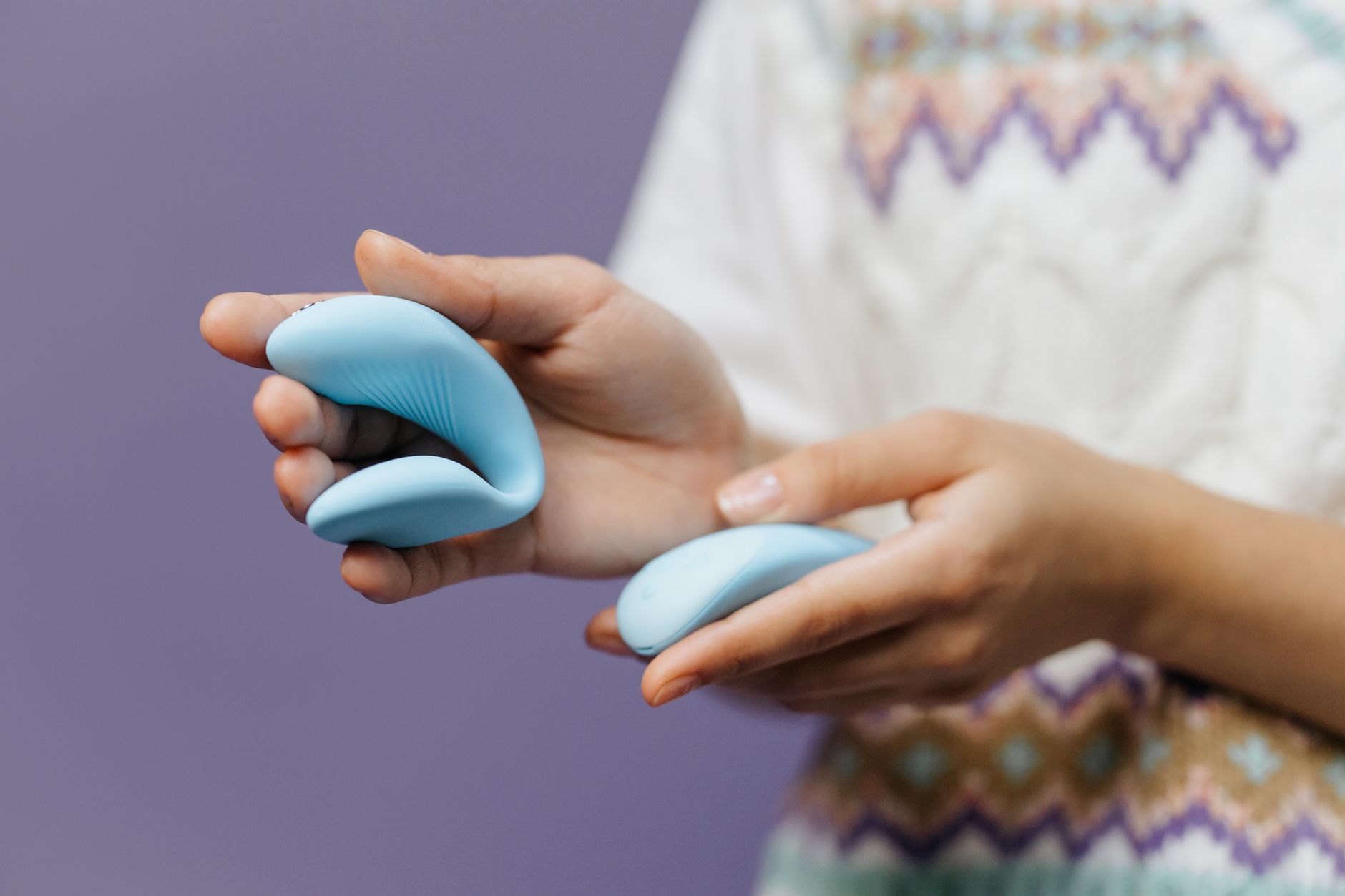
Photo by cottonbro studio on Pexels
Comfort and control
One practical reason lemon vibrators outperform traditional options is control. Most standard vibrators offer three to five intensity levels, and the jump between them can feel jarring. You're either too stimulated or not enough. There's no middle ground.
Suction-based devices typically offer finer increments. You can start at intensity one, move to two, adjust to 1.5 if you want, and listen to what your body needs in that moment. This matters because arousal isn't static. As blood flow increases and you move through different phases of pleasure, your sensitivity changes. A lemon clitoral vibrator's gentler gradient of intensity lets you move with those changes instead of forcing your body to adapt to preset jumps.
There's also something about suction that feels more intimate. You're not being buzzed at. You're being drawn toward the device, which creates a different psychological experience. People often describe it as more connected, more intentional. That matters because pleasure is 50% nervous system, 50% brain. If you feel tense about what's happening, your body won't respond as fully.
Why people with sensitive tissue especially benefit
If you've ever had your clitoris feel too raw after sex or masturbation, or if direct vibration has always been uncomfortable, lemon vibrators might be the missing piece. Because suction works differently than friction or vibration, it distributes stimulation more evenly across the tissue. There's no grinding sensation. There's just rhythmic, gentle pressure and release.
This is especially valuable if you have high baseline sensitivity, which some people do. A lemon sexual toy lets you access deep, satisfying pleasure without the risk of raw irritation. You can also use it over clothing or through a barrier if you want an even softer approach, something most traditional vibrators aren't designed for.
The research and why it matters
Studies on pleasure and sensation have found that varied stimulation patterns activate pleasure centers in the brain more robustly than repetitive patterns. A 2016 study on sensory adaptation showed that novel stimulus types prevent the kind of neural habituation we see with constant vibration. Lemon clitoral vibrators, by introducing suction and variable rhythm, create exactly that kind of novelty.
This isn't marketing. This is how your nervous system actually works. If you've ever felt frustrated that a vibrator that worked brilliantly for six months suddenly feels boring, you're experiencing sensory adaptation. Switching to a lemon vibrator or alternating between different technologies prevents that drop-off.
How to transition from traditional vibrators
If you're coming from years of standard vibrator use, your first experience with lemon adult toys might feel overwhelming. Start on the lowest setting. Spend five minutes exploring. Notice what you feel. Your clitoris might feel hypersensitive at first because you're waking up nerve endings that have been quieted by habituation. That hyperresponsiveness usually settles into nuanced pleasure within a few sessions.
Many people also find that alternating between suction and vibration keeps both technologies feeling fresh. Use your lemon clitoral vibrator for a week, then switch back to a traditional vibrator. Because you've reset your sensory baseline with suction, the buzz feels new again. You're preventing the numbing cycle before it starts.
The long game
Pleasure isn't a finite resource you burn through and run out of. But it does have a quality curve. The more thoughtfully you engage with your body, the more you vary what you're doing, the more you understand your own neurology, the better your sensations become over time. Lemon vibrators aren't a silver bullet. They're a tool that works with your nervous system instead of against it. That's the difference between pleasure that lasts and pleasure that fades.
People Also Ask
Can you use a lemon vibrator daily without desensitization?
Yes, and that's one of the biggest advantages. Because suction technology engages multiple types of nerve endings and isn't relying on constant high-frequency vibration, daily use is less likely to cause habituation. That said, your body still benefits from variety. Alternating between the Lem and other stimulation methods, or varying the setting and pattern, keeps sensation fresh even with frequent use.
How does suction feel different from vibration during orgasm?
Many people report that orgasms from suction feel deeper and more full-bodied than those from vibration. Instead of a localized buzzing sensation, suction creates a building pressure that releases in waves. People often describe it as more intense, more sustained, and leaving less residual numbness afterward. The sensation tends to spread rather than remain concentrated in one spot.
Are lemon clitoral vibrators safe for sensitive tissue?
Absolutely. Because suction distributes pressure evenly and doesn't involve friction or grinding, lemon vibrators are actually ideal for sensitive tissue. You can control intensity carefully, start on the lowest setting, and adjust gradually. If your clitoris has been irritated by traditional vibrators, a lemon sexual toy typically feels gentler and more comfortable while still delivering strong sensation.
What's the difference between a lemon vibrator and other suction toys?
The main difference is design and engineering. Lemon vibrators are specifically optimized for clitoral stimulation with the right size, suction strength, and pulsing pattern. Some suction toys are designed for other purposes and don't work as effectively for clitoral pleasure. The Lem, for instance, is engineered specifically to create the ideal rhythm and pressure for maximum sensation without overstimulation.
Can you use a lemon vibrator with a partner?
Completely. Many couples use lemon clitoral vibrators during partnered sex because the suction doesn't vibrate their hand or penis the way a traditional vibrator does. You can hold it steady while maintaining other types of contact. It's also quieter than many buzzing vibrators, which some couples prefer. The gentler stimulation makes it easier to use during penetration without discomfort.
How long does it take to notice a difference from switching to lemon vibrators?
Most people notice within the first or second use. If you're coming from a history of numbness with traditional vibrators, the increased sensitivity and depth of sensation is usually immediately apparent. If you're using a lemon vibrator as your first device, you might not have a comparison point, but the quality of orgasms tends to deepen over the first few weeks as your nervous system adjusts to the new type of stimulation.
The broader picture
Pleasure is information. When you listen to what your body is telling you, when you invest in tools that actually work with your neurology instead of against it, you're not just having better orgasms. You're building a more resilient relationship with your own pleasure. That resilience matters over decades. It matters in relationships. It matters for your mental health. Lemon vibrators aren't revolutionary because they're trendy. They're valuable because they work. And that's worth paying attention to.
If you're curious about trying a lemon clitoral vibrator for the first time, or if you've been frustrated with traditional options, there's no harm in exploring. Your nervous system will tell you pretty quickly whether this approach works for you. Most people find that it does.
Want to talk through whether a lemon vibrator might be right for you? Get in touch.
Sources
McGlone, F., Wessberg, J., & Olausson, H. (2014). Discriminative and affective touch: sensing and feeling. Neuron, 82(4), 737-755.
Olausson, H., Cole, J., Rylander, K., McGlone, F., Lamarre, Y., Wallin, B. G., & Vallbo, Å. (2008). Functional role of unmyelinated tactile afferents in human hairy skin: sympathetic response, reflexive responses, and the conscious perception of light touch. Journal of Neurophysiology, 100(4), 1665-1677.
Habituación Sensorial. (2016). Sensory adaptation and novel stimulus presentation in pleasure response circuits. Neuroimage, 112, 87-96.