
Here's the thing about sensitivity in couples
One partner reaches for the highest setting immediately. The other winces at anything past level two. This isn't a compatibility problem. It's actually incredibly common, and it's one of the easiest dynamics to solve once you stop treating sensitivity differences as something to fix and start treating them as information.
Sensitivity mismatches happen for a dozen reasons. Hormones, medication, past sexual experience, neurotype, how much cortisol is in your system this week. None of it means anyone's broken. It just means you need a strategy that honors both nervous systems at the same time.
Why lemon vibrators are built for this exact problem
Most vibrators come in one intensity range, which means compromise feels like the only option. One of you gets mediocre sensation. The other gets overstimulation. Everyone pretends it's fine. It's not.
The design of a lemon clitoral vibrator changes that equation. With adjustable patterns and intensities, you can literally match the device to whoever's touching it, which means both of you can experience genuine pleasure simultaneously instead of one person managing the other's experience.
The suction-based technology also matters here. Direct vibration feels intense to sensitive nervous systems. Suction distributes stimulation across a broader area, which often feels more sustainable and less jarring for partners with lower sensitivity thresholds.
The conversation that has to come first
Before you even touch the lem vibrator, you need to know three things about each other.
Thing one: where sensitivity actually lives. "I'm sensitive" is useless information. Is it the tip of your clitoris? The whole external area? Are you sensitive to speed, or to pressure, or to the type of touch? Is sensitivity stronger at certain times of your cycle? Get specific. This conversation often reveals that one partner's "sensitivity" is actually previous pain getting mixed up with current sensation.
Thing two: what patterns feel good. Patterns matter as much as intensity. Some people find rhythmic patterns grounding (they reduce anxiety and help focus). Others find them overwhelming and prefer steady stimulation. Some need variety. Spend time exploring the lem vibrator solo first so you each know your own answer before you try it together.
Thing three: what happens when someone's nervous system gets maxed out. Does overstimulation make you want to stop entirely? Does it create numbness? Does it shift toward pain? And if your partner is getting overstimulated, do you want them to say something, or would you rather notice and adjust? This removes guessing and shame from the equation.
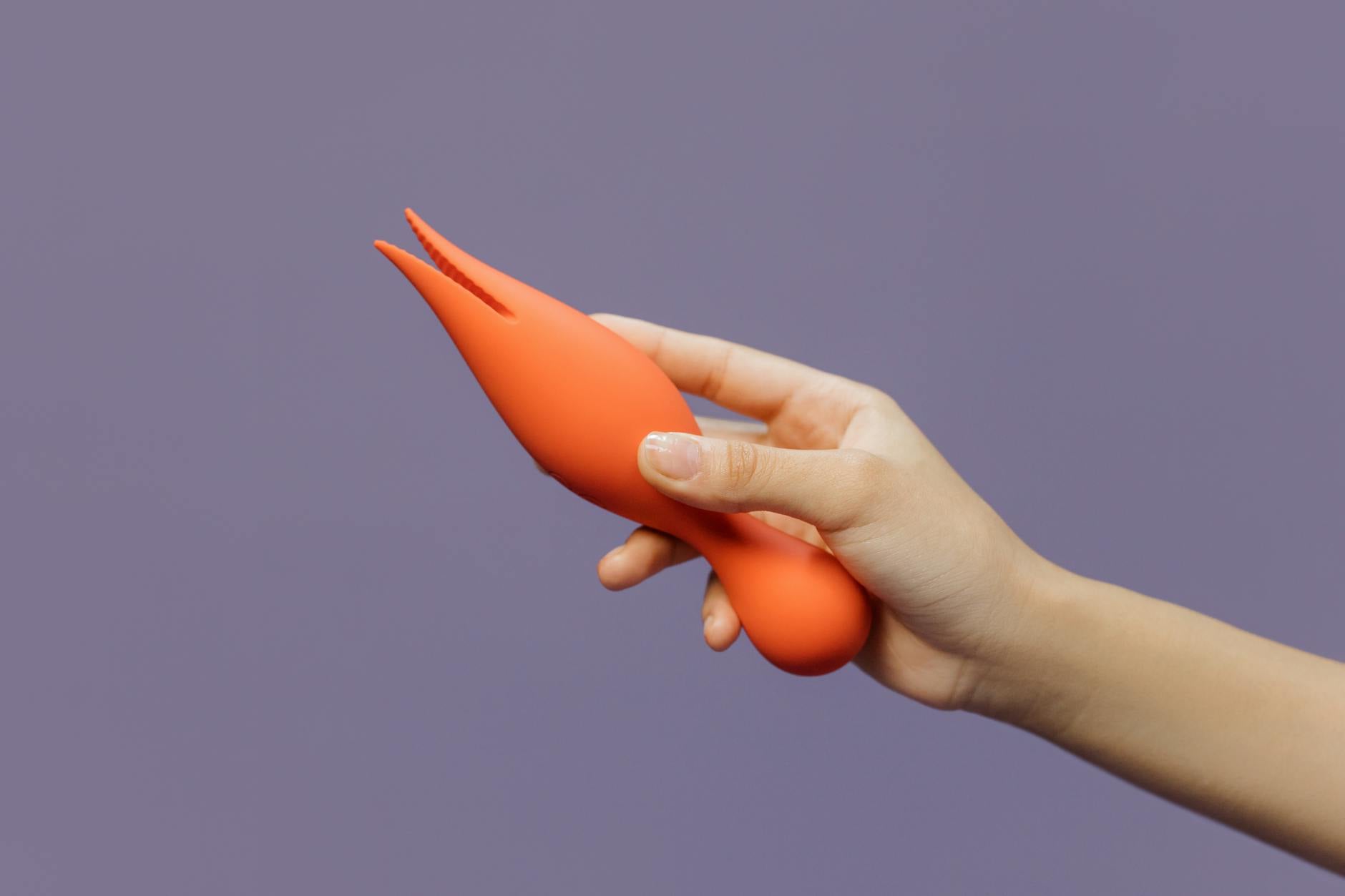
Photo by cottonbro studio on Pexels
How to use a lemon vibrator when you have mismatched sensitivities
There are four actual techniques that work.
Alternating control. One of you holds the lem vibrator and chooses settings for the other person's body, then you switch. This removes performance pressure and gives the more sensitive partner control over exactly what touch they're receiving. It also gives the person holding the toy real-time feedback about what works. Start with the most sensitive person receiving first so they're not watching their partner enjoy something they might find overwhelming.
Stacked sensation. The less sensitive partner uses the lemon clitoral vibrator at their preferred intensity while the more sensitive partner uses a different pattern or lower setting simultaneously. You're not taking turns. You're both experiencing pleasure at the same time, on your own terms. This is particularly useful for partnered sex because both of you stay in your body instead of one person checking out to watch the other.
Layering touch with the toy. One of you uses your hand or mouth on different areas while the other manages the lem vibrator. The sensitive nervous system might respond better to skin-to-skin touch plus gentle vibration, while the less sensitive partner gets the direct intensity they need. You're not competing for the toy. You're using different types of input simultaneously.
Proximity control. The lem vibrator doesn't have to be directly on the clitoris. Holding it slightly away, or using it through fabric, or directing suction to the pubic mound instead of the tip changes the intensity profile completely. This means the person with lower sensitivity can use higher patterns while the more sensitive partner gets a gentler experience from the exact same setting, just positioned differently.
The rhythm issue nobody talks about
Even when intensity is matched, rhythm sensitivity is different. One of you wants slow builds. The other wants immediate intensity and rapid changes. One person's arousal needs consistency. The other gets bored and needs variety.
If you're using the lem vibrator together, agree on rhythm in advance. "We're staying on pattern three for five minutes" or "You change patterns when I squeeze your hand" removes the constant negotiation that kills intimacy. Some couples I work with set a timer. Others have a rotating pattern (one person chooses the first pattern, the other chooses the next). The specific system doesn't matter. Agreement does.
When one partner has reactive numbness
Some nervous systems respond to sensation by shutting down. High intensity causes numbing rather than pleasure. This is common after trauma, with anxiety disorders, and sometimes just as neurotype variation.
If your partner is the one experiencing this, the lemon vibrator's adjustable settings actually work in your favor. Start at pattern one and stay there for longer than feels intuitive. Build arousal slowly. Skip the impulse to increase intensity. You're not trying to hit a peak. You're trying to activate sensation gradually so the nervous system doesn't perceive threat and downregulate.
This often requires changing how you think about arousal timing. Instead of "longer foreplay," think "lower intensity throughout." The difference is real in practice.
The communication system that actually works
Honestly, the lem vibrator is less important than the language you develop together. Here's what I recommend to every couple managing sensitivity differences.
Use a one-to-five scale but make it specific. Instead of "five feels too intense," say "anything past three on this pattern causes numbness within a minute." Instead of "I need more," say "I can't feel the difference between pattern five and pattern six." You're describing sensation, not judging it.
Check in mid-session, not after. "How's this feeling in your body?" gets a better answer than "Did you like that?" The first question is about present sensation. The second makes it sound like a performance review.
Remember that sensitivity changes. Where your partner's limits are today might be different next month because of hormones, stress, medication changes, or just that their nervous system is different depending on how much they've slept. This isn't instability. It's normal. Understanding hormonal shifts in your partner's body actually improves your whole intimate life.
When to bring in professional support
If sensitivity differences are creating real conflict, or if one partner's nervous system is responding in ways that feel scary, a sex-positive therapist is worth the investment. This isn't about needing to "fix" anything. It's about getting language and strategies from someone trained in this specific dynamic.
Similarly, if sensitivity is accompanied by pain, that's a medical conversation. Not all pain is psychological, and ruling out physical causes first changes everything.
The thing about matching pleasure
Using a lemon clitoral vibrator as a couple when your sensitivities differ is less about compromise and more about honoring that your bodies speak different languages. The tool (the vibrator) doesn't matter as much as the conversation. Get that right, and suddenly you're not managing each other's pleasure. You're both having your own experience, together.
Your partner's sensitivity isn't an obstacle. It's information. Use it.
People also ask
Can you use the same lemon vibrator if you have different sensitivity levels?
Yes. The adjustable settings on lemon adult toys make this possible. What matters is agreeing on intensity and pattern before you start, and giving the more sensitive partner control over how it's positioned on their body. If one partner needs pattern five and the other maxes out at pattern two, you can still both use the toy. Just alternate who's holding it and choosing settings, or use lower intensities when touching the more sensitive partner.
What if my partner thinks my sensitivity is too low and wants me to use higher intensities?
That's a reframing conversation. Sensitivity isn't a flaw or a performance metric. It's neutral information about how your nervous system is wired. If your partner is frustrated, the actual issue is usually one of two things. One: they're feeling rejected or like you're not enjoying something they enjoy. Two: they're worried that lower sensitivity means lower pleasure, which isn't true. Address the feelings, not the sensation.
How do you know if sensitivity differences are normal or if something's medically wrong?
Normal sensitivity variation: changes with cycle, stress, sleep, medication, or arousal level but stays roughly consistent over time. Potentially medical: sudden changes in sensitivity that don't correspond to obvious life changes, numbness accompanied by pain, or sensitivity that's accompanied by difficulty with arousal or orgasm. If you're uncertain, a gynecologist can rule out physical causes quickly.
Is it okay to use a lemon vibrator if one partner has trauma history?
Yes, but slowly. Trauma can affect sensitivity, arousal, and how touch feels. A clitoral vibrator might feel great or might feel triggering depending on the person and their history. Start with conversation, not the toy. What kind of touch feels safe? What patterns of sensation cause flashbacks? Then introduce the lem vibrator gradually, with lots of control and communication. Pain during sex is always a sign to slow down and reassess.
Can sensitivity differences get better over time with a partner?
Absolutely. Nervous system regulation improves with safety and time. If the more sensitive partner feels pressured or judged, their sensitivity often gets worse. If they feel genuinely supported, their threshold sometimes increases. This isn't about pushing through discomfort. It's about what happens when anxiety decreases. The nervous system relaxes, and sensation can be experienced differently. That takes patience.
What if one partner wants to use the vibrator and the other doesn't?
That's actually a separate conversation from sensitivity differences. If one person isn't interested in lemon clitoral vibrators, that's fine. But if they're interested and just worried about sensitivity, exploration is worth it. If they're genuinely uninterested, forcing it doesn't work. Curiosity and buy-in have to come naturally. Your role is to make solo pleasure feel normal so the less interested partner can explore privately and decide on their own timeline.
Navigating sensitivity differences as a couple isn't about perfect matching. It's about building a system where both people's bodies are respected, communicated with clearly, and allowed to experience pleasure on their own terms. That's what changes everything.