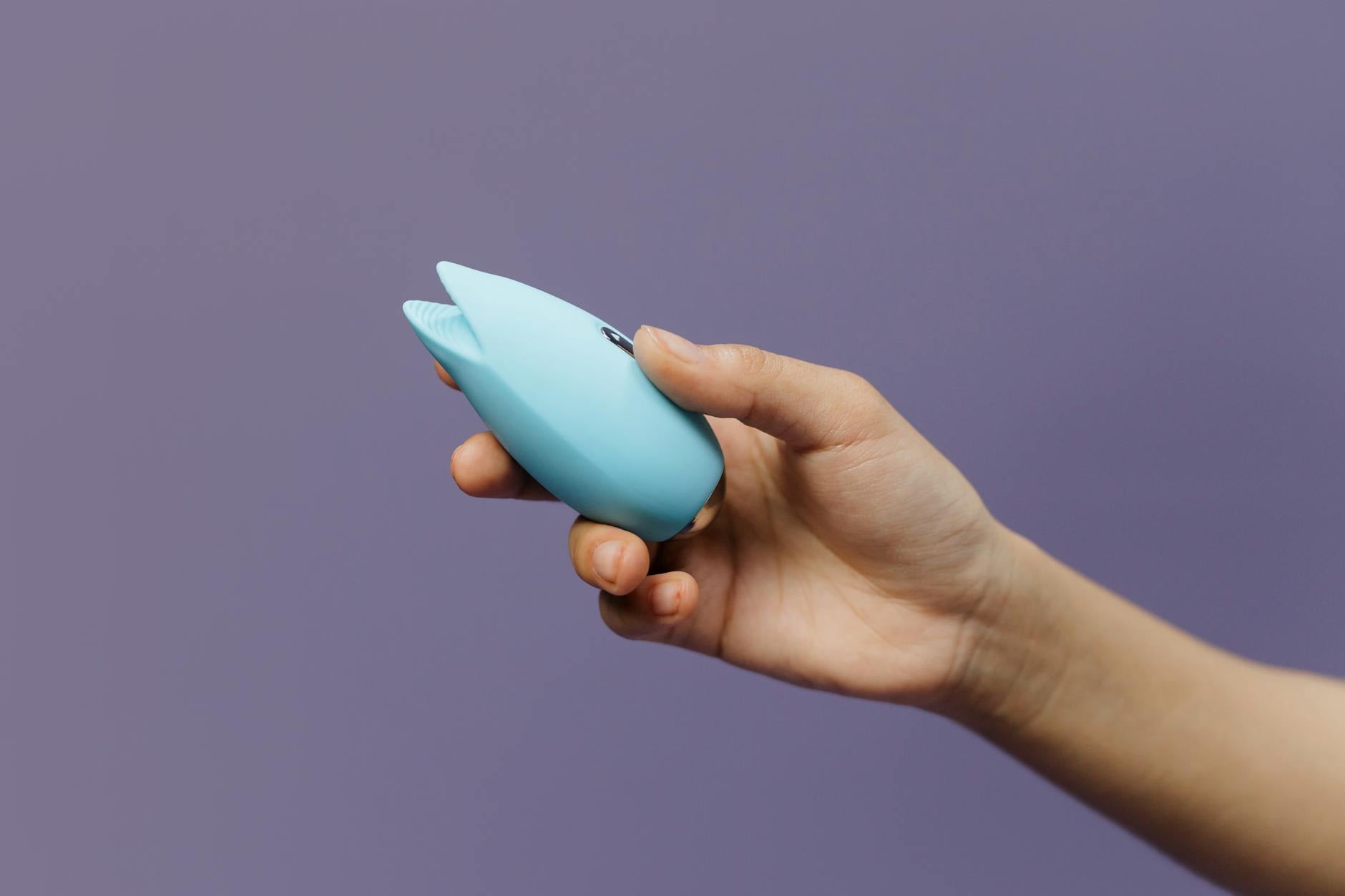
Let's name what you're actually feeling
First-time vibrator anxiety isn't really about the toy. It's about stepping into something new without a script, without knowing what your body will do, without the safety of having done this exact thing before. That's legitimate. Your nervousness is information, not a problem.
Here's what I know from working with hundreds of people through this exact transition: the anxiety almost always dissolves the second you give yourself permission to be curious instead of to perform.
Why anxiety shows up in the first place
Three things are usually happening at once, and naming them helps.
You're breaking a silence. If you grew up in a culture or family where female pleasure wasn't discussed openly, your body might be carrying that quiet. Using a clitoral vibrator is literally saying out loud (to yourself, at least) that your pleasure is worth the effort, the money, the time. That's radical. Anxiety makes sense.
You're uncertain about sensation. You don't know how intense a lemon vibrator will feel. You don't know if you'll like it. You don't know if your body will respond the way you expect. That uncertainty is uncomfortable, especially when it's intimate. Your nervous system is doing its job.
You might be carrying old messages. Some people internalized that vibrators are "lazy" or "cheating" at sex, or that needing one means something is wrong with their body or their relationship. That's absolutely not true. But the messages stick. They create background noise.
None of this means you shouldn't do this. It means you should do it slowly, with intention.
The setup that actually matters
Before you even touch the toy, your environment does half the work.
Time. Not five stolen minutes while your partner is in the shower. You need a full hour where you don't have to listen for anyone. Your nervous system needs to know that interruption isn't coming. If you live with others, that might mean booking a time when you're alone in the house, or going somewhere you feel safe and private. This isn't luxury. It's the foundation.
Space. You need to be comfortable. That might be your bed, the bathtub, a comfortable chair. Not on the floor with your back aching. Not perched on the edge of anything. Your body is going to give you signals, and it can't do that if it's also managing physical discomfort.
No phone. Or if you have it with you, it's face-down and on silent. Yes, really. Your nervous system is already a little heightened. The ping of a text will snap you out of the moment.
One small thing to reduce pressure. Light a candle. Put on a specific playlist. Something that signals to your brain: this is intentional, this is mine, this is okay.
Starting without the toy
I know you want to skip this part. Don't.
Spend five to ten minutes touching your own skin before you turn the vibrator on. Your shoulders, your thighs, your breasts if that feels good. Your neck. The place behind your ears. Not because this will "warm you up" for sex (that framing is about performance again). Do it because your nervous system needs to remember that sensation and touch can just feel good, with no endpoint.
Then move to your genitals without the toy. Slow touch, light pressure. You're remapping what you actually like without the amplification of vibration. Most people discover that their preferences are different than they thought. That information matters.
The actual first use of a lemon vibrator
When you're ready, start at the lowest setting. For the Lem or any quality clitoral vibrator, that's pattern 1 or the lowest intensity.
Do not start with rhythm or speed in mind. Start with curiosity: what does this actually feel like on my skin? Light pressure or firm? On the side of the clitoris or directly on it? Throbbing or waves? There's no right answer. You're collecting data.
Keep your hand on the toy. You're in control, not the other way around. You can pause, adjust, move it, turn it off. That sense of agency dissolves anxiety faster than anything else.
If intensity feels too much, stop. That's not failure. That's you learning what your body needs. Vibration is amplified, and not every body loves the highest speeds. Some people prefer a gentle pattern at a lower intensity. That's completely normal.
The feelings that show up (and what they actually mean)
Numbness or lack of sensation. This often happens in the first thirty seconds because anxiety literally dampens sensation. Your nervous system is still in defense mode. Keep going gently. Give it two to three minutes. Usually, sensation returns once your body realizes this is safe.
Weirdness or awkwardness. It's strange to do something new with your own body. You might feel disconnected from yourself. That passes. Most people say it takes three or four sessions before it feels natural.
Pressure to orgasm. You're using a vibrator, so obviously the goal is an orgasm, right? Wrong. The goal is pleasure and discovery. If an orgasm happens, wonderful. If not, you still learned something about your body. Let go of the endpoint.
Involuntary movement or tensing. Your legs might shake, your pelvis might tilt, your breathing might change. This is your body talking. It's not embarrassing, even if you're alone. It's information.
If you freeze or panic stops happening
Stop. Step away. Breathe for two minutes without doing anything.
Then ask yourself: is this actually uncomfortable, or is it unfamiliar? Those feel the same in the moment but they're different. Unfamiliar gets easier with time. Uncomfortable means you need a different approach.
Maybe a lemon vibrator isn't your toy right now. Maybe you need something quieter, or smaller, or less intense. Maybe you need more time. All of that is fine. There's no timeline for this. How to use a lemon vibrator as a beginner over 40 covers approaches that work for a lot of people coming to this with significant hesitation.
What happens after the first time
You might feel euphoric. You might feel nothing special. You might feel strange, or emotional, or weirdly vulnerable. All of it is normal.
The second time is usually easier because you know what to expect. The third time, your body starts to relax more fully. By the fourth or fifth time, it often stops feeling like an experiment and starts feeling like a normal part of how you experience pleasure.
If you have a partner, you don't owe them a report. You don't have to share what happened or whether you had an orgasm. You get to keep this for yourself first. That privacy is actually protective. It helps you stay connected to what you like, not what you think you're supposed to like.
The bigger picture
Using a clitoral vibrator for the first time while managing anxiety isn't about conquering fear. It's about gently expanding what you're willing to explore. You're saying: my pleasure is worth my own time. My body deserves attention. What I like matters.
That's the part that changes things. Not the vibrator itself. The decision underneath it.
When you're ready to explore intentionally with a partner, how to use a lemon vibrator with your partner walks through that conversation and practical steps. But first, this is about you. Take the time you need.
People also ask
Is it normal to feel anxious using a vibrator for the first time?
Completely. You're doing something new, vulnerable, and intimate. Your nervous system is alert. That's not a sign something is wrong. It's actually a sign your body is paying attention. The anxiety typically lessens significantly after the first or second use, once your nervous system learns that this is safe and you're in control.
How long should I use a lemon vibrator my first time?
Start with ten to fifteen minutes total, including the time you spend exploring without the toy turned on. There's no rule about duration. Some people find what they need in five minutes. Others want to spend more time learning. Stop when you feel like stopping, not when you think you should.
What if I don't orgasm the first time I use a vibrator?
That's the most common experience, actually. Orgasm requires a baseline of relaxation and safety that's hard to access when you're trying something new. The goal of your first session is discovery, not a specific outcome. If an orgasm happens, great. If not, you still learned something valuable about what sensations you like.
Can anxiety actually prevent me from feeling a vibrator?
Yes. Anxiety activates your sympathetic nervous system (fight-or-flight), which literally dampens sensation. That's why settling your nervous system through breathing, privacy, and removing time pressure matters so much. Give your body two to three minutes of gentle exploration. Usually, sensation returns once you relax.
Should I tell my partner I'm using a vibrator?
That's your choice. There's no rule. Some people prefer to explore alone first and build confidence before involving a partner. Others feel more comfortable being open from the start. Do what feels right for you, not what you think a partner expects. If you're in a relationship where you can't have private sexuality, that's a different conversation.
What lemon vibrator should I start with if I'm anxious?
Something with a lower intensity range and a simple interface. The Lem is designed with beginner-friendly patterns and intuitive controls. If you're worried about intensity, start at the lowest setting and know you can always adjust. You don't need anything fancy. Simple, controllable, and reliable is the combination that builds confidence.