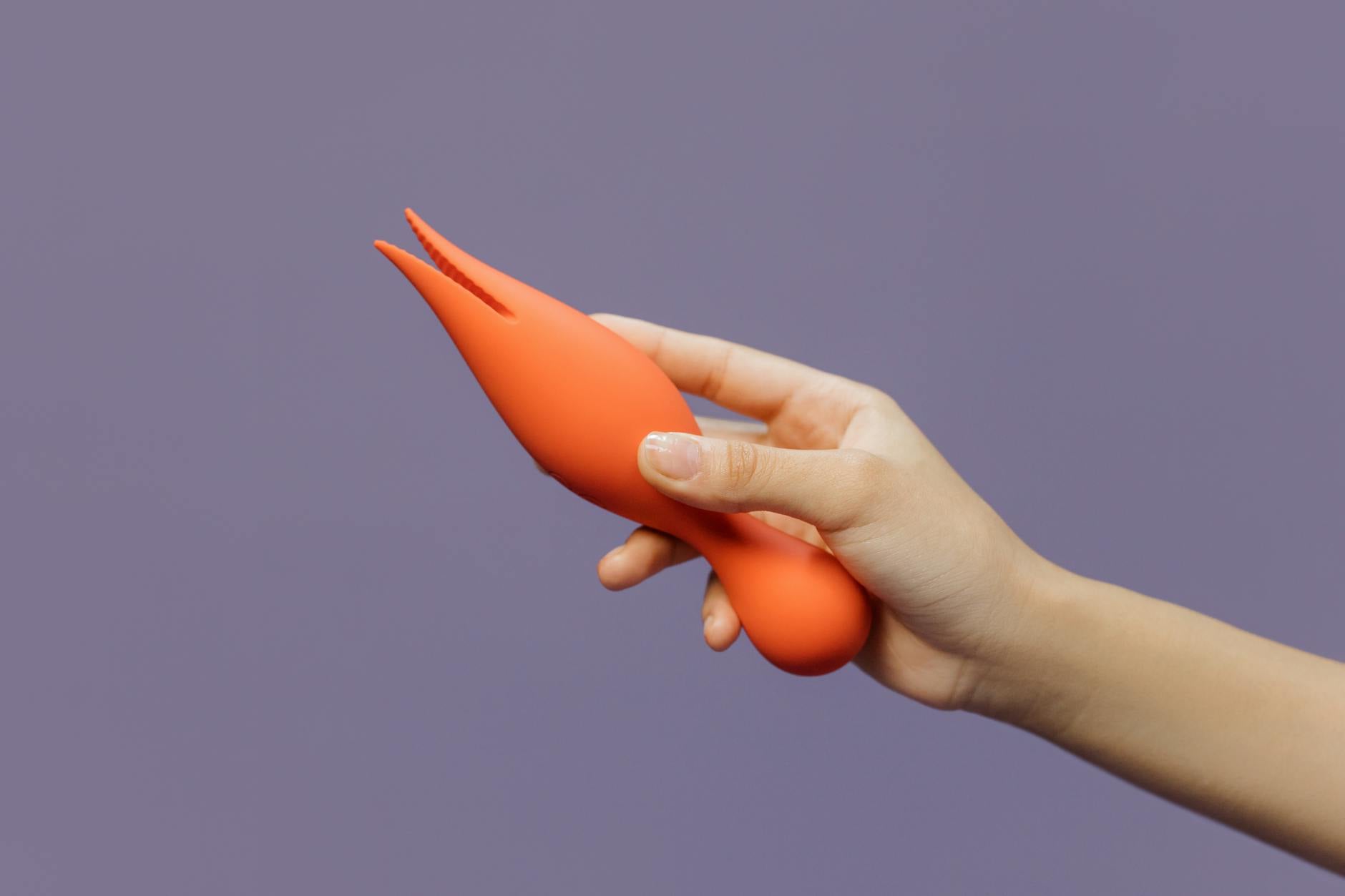
The paradox nobody talks about
You want pleasure. You also simultaneously don't think you deserve it. Both things are true at the same time, and that conflict is what kills arousal before it starts.
I work with clients on this exact friction constantly. They'll say things like "I know intellectually that I'm allowed to touch myself, but the moment I try, my brain screams at me that I'm being selfish" or "I feel guilty even thinking about buying a vibrator." The guilt isn't about the vibrator. It's about the belief underneath that your pleasure isn't a priority, that wanting something for yourself is somehow indulgent or wrong.
Here's what I know after decades of clinical work: shame is the single biggest barrier to arousal. Not body image, not age, not past trauma. Shame. And a lemon vibrator can't fix shame directly, but it can become the tool that helps you practice pleasure in a new way.
Where the judgment voices come from
Your internal critic wasn't born with you. She was downloaded.
Maybe your parents never talked about sex, which taught you it was unspeakable. Maybe you grew up in a religious environment that framed pleasure as dangerous. Maybe you were shamed directly by a partner or a peer. Maybe you absorbed the cultural message that good women don't prioritize their own pleasure, that wanting something sexually is selfish or trashy.
The voices feel like truth, but they're just old programming. The problem is that programming lives in your nervous system. When you go to touch yourself, your body registers danger even though there's no actual threat.
Photo by cottonbro studio on Pexels
Why shame sabotages arousal physiology
Arousal requires blood flow to the genitals, muscle relaxation, and mental presence. Shame does the opposite. It triggers cortisol (the stress hormone), tenses your muscles, and pulls your attention inward onto judgment instead of sensation. Your brain literally cannot be in a state of arousal and a state of shame simultaneously. The nervous system won't allow it.
So even if you're using the best clitoral vibrator on the market, if shame is active in your body, you'll feel numb or disconnected. You might orgasm, but it will feel mechanical rather than pleasurable. You might stop yourself mid-sensation because the guilt becomes unbearable. This is why so many people report that their vibrators "don't work" when actually their nervous system is blocking sensation.
The lemon vibrator becomes useful here because it's external. It's not your hand, which might trigger the old messages about "that's dirty." It's not something you're doing to yourself. It's a tool you're using. That slight psychological distance can give your nervous system permission to relax.
The practical steps to use pleasure without the guilt
Start small and private. Not because there's anything wrong with pleasure, but because your nervous system needs practice. Pick a time when you're completely alone and unlikely to be interrupted. Tell yourself explicitly: "My pleasure matters. I deserve this time." Those words might feel corny, but they're a direct override to the shame voice.
Name the judgment without fighting it. When the guilt voice shows up (and it will), don't try to argue it away. That just makes it stronger. Instead, acknowledge it like you're noticing weather: "There's that old message. That's the voice that learned I wasn't supposed to want things. Thanks for the input, but I'm trying something different right now."
Use the vibrator as permission, not as a solution. A lemon clitoral vibrator makes it easier to reach orgasm, yes. But more importantly, it's a permission slip. It's you saying to your body: "I'm treating my pleasure as real and worthy of a real tool." That shift in how you relate to your own pleasure is more important than the orgasm itself.
Build in a five-minute wind-down after. Don't jump up immediately. Stay with your body for a few minutes after, even if nothing particularly intense happened. This teaches your nervous system that pleasure followed by rest is safe. No punishment. No judgment. Just completion.
Rewriting the story your body tells itself
Every time you use a lemon vibrator without judgment, you're sending a message to your nervous system: "This person's pleasure is real. Her wants matter. She's allowed to take time for this." Repeat that enough times, and the messaging starts to shift.
I see this happen in my practice consistently. Someone starts using a clitoral vibrator hesitantly, weighed down by old shame. Six weeks later, they're touching themselves without guilt. Three months in, they're orgasming more easily and with more intensity. A year later, they're integrating pleasure into their partnered sex with confidence instead of apology.
The vibrator didn't cause that change. Rewiring the belief system did. But the vibrator gave them a tool to practice the new belief repeatedly, in a way that felt separate from their old self-judgment.
What to do when shame surfaces during sex
It will. Even when you've done the work, old programming surfaces, especially during partnered sex or when you're tired or stressed.
If you're with a partner, you can say: "I'm having some old shame come up. It's not about you or this moment. I'm just going to pause for a second." Most partners appreciate the honesty. If they don't, that's different information about the relationship.
If you're solo, same approach: pause, breathe, name it, gently return to sensation. You're not trying to force pleasure through the shame. You're just practicing noticing and continuing anyway. Over time, that practice rewires your nervous system.
Building long-term permission
The real work is daily, off the mat. Notice when you apologize for wanting something. Notice when you schedule your own pleasure last. Notice when you prioritize someone else's comfort over your own needs. Shame is a whole ecosystem, not just a vibrator problem.
But small acts of reclamation matter. Using a lemon vibrator without guilt is one of those acts. It's low-stakes enough that it feels manageable, but powerful enough that it rewires something real.
Your pleasure isn't selfish. It's not indulgent. It's not something to apologize for or hide. And the fact that you're reading this, looking for permission and tools, means some part of you already knows that's true. Now you just need to convince your nervous system.
FAQ: Pleasure, judgment, and lemon vibrators
Is it normal to feel guilty when using a vibrator?
Completely normal, especially if you grew up in environments where pleasure was discouraged or pathologized. Shame around masturbation and sexual self-care is one of the most common barriers I see in my practice. The guilt doesn't mean you're doing anything wrong. It means you absorbed a belief system that needs updating. That's fixable.
Can a lemon vibrator actually help me move past shame?
Not directly. A vibrator can't reprogram your nervous system. What it can do is give you a structured way to practice experiencing pleasure without punishment. Each time you use it guilt-free, you're training your body that this is safe. Over time, that practice creates change. The vibrator is the tool. Your repeated permission is what heals.
What if I feel ashamed even buying a vibrator?
That's the shame system working exactly as designed. It wants you to stay small and hidden. If online shopping feels too exposed, consider having it shipped to a trusted friend's house, or tell yourself: "This is an investment in my health. I don't need to explain my purchases to anyone." You might also revisit how to use a lemon vibrator when you're starting over after divorce, which touches on rebuilding permission after major life shifts.
How long until shame stops interfering with pleasure?
It depends on how deep the shame goes and how consistently you practice. Most people notice a shift within 4 to 8 weeks of regular use without self-judgment. More significant rewiring takes 3 to 6 months. The key is consistency and gentleness. You're not fighting shame. You're just slowly teaching your body a different story.
Should I tell my partner I'm using a vibrator if I'm worried about judgment from them?
That depends on the relationship. If your partner has demonstrated they're supportive of your autonomy and pleasure, then yes, sharing can deepen intimacy. If you're worried they'll judge you, that's important information about the relationship dynamic. You might explore how to use a lemon vibrator when your partner avoids discussing pleasure or consider whether this is a broader issue worth working through together.
Can shame about pleasure affect other areas of my life?
Yes. Shame is a global signal to your nervous system that you don't deserve good things. People who struggle with pleasure often also struggle with asking for what they need at work, setting boundaries, or believing their feelings matter. Reclaiming your pleasure isn't frivolous. It's foundational to how you move through the world.
What if using a vibrator actually increases my anxiety?
That can happen if you're using it as a performance task rather than as pleasure practice. If anxiety spikes, slow down. You might be pushing faster than your nervous system is ready for. Consider using a lemon vibrator purely for sensation exploration without any goal of orgasm. Let your hand rest on your body while it's on a low setting. Make it about presence, not achievement. If anxiety remains high, working with a therapist trained in somatic work can help.
Your pleasure is already yours
You don't need permission from anyone to own your body and want pleasure from it. But I know that intellectual knowledge doesn't always translate to embodied belief. Using a lemon clitoral vibrator while actively rewiring shame is one practical way to bridge that gap.
Every time you choose yourself, you're voting with your nervous system that you matter. Start there. Everything else builds from that foundation.
If you're ready to have a deeper conversation about pleasure, shame, or how to integrate these practices into your relationship, get in touch with us. We're here to help.